A dull blade turns a great dinner plan into a wrestling match. If you are asking which knife cuts raw meat best, the answer is not one do-it-all blade. It is the knife that matches the cut in front of you. Pick the right tool, keep it sharp, and raw protein prep becomes faster, cleaner, and far more satisfying.
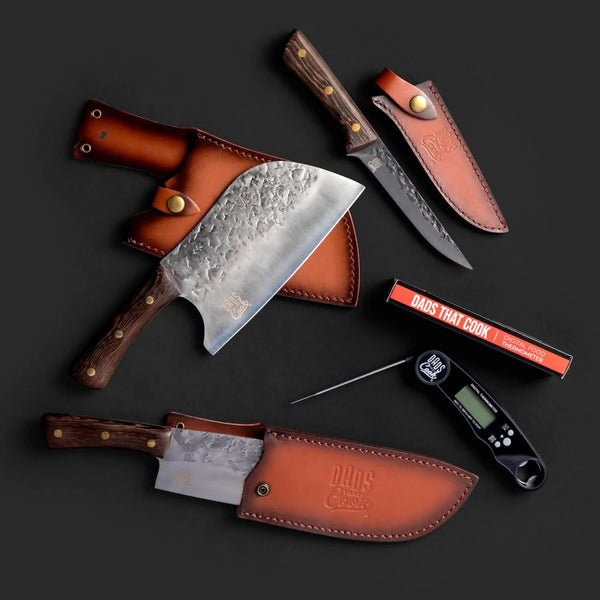
A chef knife handles most everyday meat prep. A boning knife takes control around bones and joints. A cleaver brings the power when a heavier chop is called for. That is the short answer. Now let’s put the right blade in your hand before the grill fires up.
Which Knife Cuts Raw Meat for Most Meals?
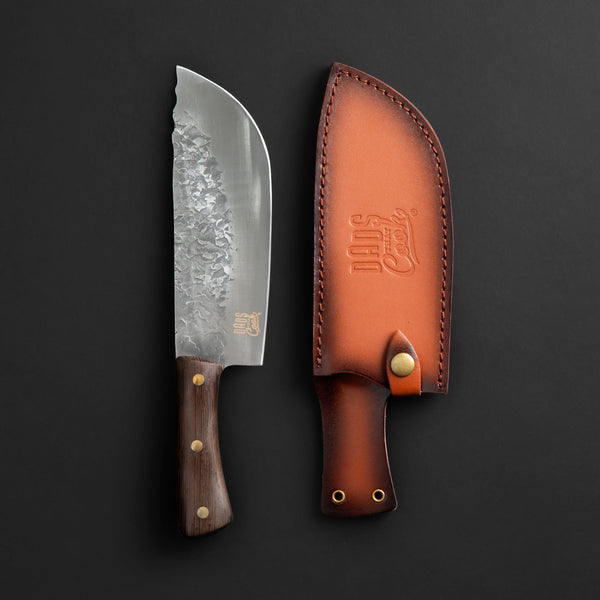
For most home cooks, a sharp 7.5- to 8-inch chef knife is the first choice for cutting raw meat. It is the workhorse for slicing chicken breasts into cutlets, cubing stew beef, trimming pork tenderloin, portioning boneless thighs, and cutting steaks from a larger roast.
The chef knife earns its spot because it combines length, control, and a curved edge that supports a smooth rocking motion. You do not need to hack at a boneless chicken breast. Set the heel of the blade down, guide it forward through the meat, and let the sharp edge do the work. Clean cuts help meat cook more evenly, too. Ragged chunks cook at different speeds, which is not how you win dinner.
A full-tang chef knife is especially useful when you are working through several pounds of protein. The steel runs through the handle, giving the knife better balance and a solid feel in your hand. That stability matters when your cutting board is loaded with a family-size batch of kebabs, chili meat, or weeknight chicken.
Use a chef knife when the meat is boneless and you need versatile, controlled cuts. It is the blade you grab first for everyday prep.
Use a Boning Knife for Precision Work
When bones, joints, skin, and connective tissue enter the picture, reach for a boning knife. Its narrow, pointed blade is built to follow contours that a wide chef knife cannot easily navigate. This is the right knife for separating chicken legs, removing a pork loin from the bone, trimming silver skin from tenderloin, or cleaning up a rack of ribs.
A 6-inch boning knife gives you a close, controlled cut without taking away too much good meat. That is the difference between trimming a brisket with confidence and carving away expensive beef because the blade is too broad to steer.
Keep the blade angled toward the bone, not into the meat. Let the bone guide your cut. Use short strokes and work patiently around joints rather than forcing the knife through them. If you feel hard resistance, stop and find the joint line. A sharp knife should glide through meat, but it should never be used as a pry bar.
Boning knives are also excellent for skinning fish and trimming fat caps. Their flexibility varies by design, but a slightly flexible blade can hug the surface of meat and bone with less waste. For dads who take barbecue seriously, this is the blade that turns a whole packer brisket or pork shoulder into a clean, cook-ready cut.
Bring Out the Cleaver for Big Chops
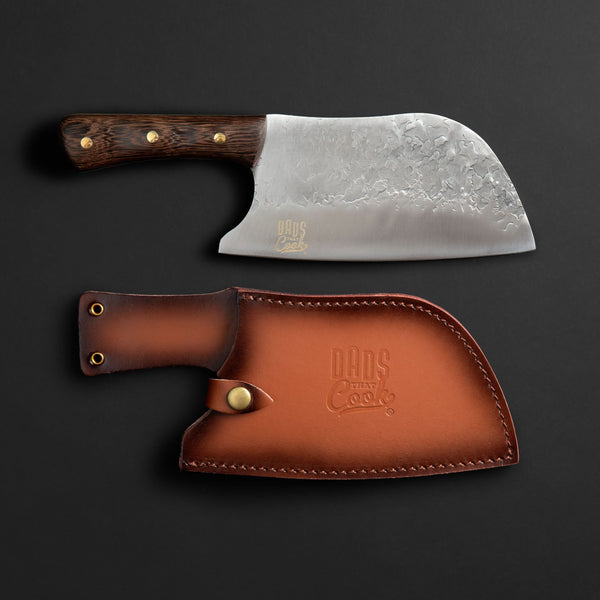
An 8-inch cleaver is the heavy hitter. Its broad blade and added weight make it useful for breaking down larger cuts, chopping through small or soft bones, and powering through dense meat prep. Think chicken wings, spareribs, or splitting a whole chicken when you want a more direct approach.
The cleaver is not always the best choice, even though it looks ready to dominate the kitchen. It is too large for fine trimming, delicate slicing, and tight work around a joint. It can also damage its edge if you swing it into large, dense bones or frozen meat. For those jobs, a saw or butcher’s tool is a better call.
Use the cleaver with purpose. Keep your non-knife hand clear, raise the blade only as high as needed, and chop straight down on a stable board. The goal is power under control, not a dramatic kitchen performance. Save the showmanship for when the ribs hit the table.
The Right Blade for Common Raw Meat Jobs
Matching the blade to the job protects your meat, your cutting board, and your patience. A chef knife works best for boneless cuts and general portioning. A boning knife wins when you are trimming, deboning, or separating joints. A cleaver handles heavier chopping where a lighter knife would bounce or struggle.
For steak, use a chef knife to portion larger cuts before cooking. For a whole chicken, start with the boning knife at the joints, then use a cleaver only if you need to cut through small bones. For pork ribs, a boning knife helps remove the membrane and trim loose pieces, while a cleaver can divide sections if needed. For brisket, the chef knife makes broad trimming cuts, and the boning knife gets under stubborn silver skin and fat seams.
There is one rule worth remembering: do not use a serrated steak knife for raw meat prep. Serrations tear soft meat fibers instead of making the clean, deliberate cuts you want. Steak knives belong at the table, where they can finish the job after a proper cook and rest.
Sharpness Beats Muscle Every Time
The best knife for raw meat is useless if the edge is dull. A dull blade slips off slick meat surfaces, forces you to press harder, and leaves uneven cuts behind. That is a safety problem and a cooking problem in one bad package.
Test your blade before a major prep session. A sharp knife should slice through a sheet of paper without snagging and should bite into a tomato skin without crushing it. If it slides, drags, or requires extra force, sharpen it before you start working with raw protein.
Use a knife sharpener when the edge needs to be restored, and hone the blade regularly to keep the edge aligned between sharpenings. These are not the same task. Sharpening removes a small amount of steel to create a fresh edge. Honing straightens the microscopic edge that naturally bends during use. Both help your knife stay ready for action.
Dads That Cook full-tang knives are built for the kind of repeat use that comes with feeding a hungry crew, but every quality blade still needs care. Hand-wash it promptly with hot, soapy water, dry it completely, and store it where the edge will not bang against other utensils. The dishwasher is tough on handles and hard on sharp edges. Treat your blade right, and it will keep earning its place on the board.
Set Up a Safer Raw Meat Station
Great knife work starts before the first cut. Put a damp paper towel under your cutting board so it cannot slide. Use a board large enough to give your hands room, and keep the handle of the knife clean and dry. A slippery handle is not a badge of honor.
For raw meat, use a dedicated cutting board or thoroughly wash and sanitize the board before cutting vegetables, fruit, bread, or ready-to-eat food. Keep a bowl nearby for trimmings and packaging so you are not carrying scraps across the kitchen. Once you finish cutting, wash the knife, board, counter, and hands before moving on.
Do not rinse raw chicken or other meat in the sink. Splashing water can spread bacteria around the area. Trim it, season it, cook it to the right temperature, and use an instant-read thermometer to confirm the center is done. Sharp prep gets the meat ready. Accurate temperature gets dinner safely to the table.
Make the Cut, Then Make the Meal
A chef knife is the best all-around answer when you need to cut raw meat. Add a boning knife for precision and a cleaver for heavier work, and you have a serious home-cook lineup ready for weeknight meals, smokehouse Saturdays, and every hungry gathering in between.
Choose the blade that fits the cut, keep it sharp, and slow down enough to make each pass count. That is how raw meat prep stops feeling like a chore and starts feeling like the first strong move toward a meal your people will remember.