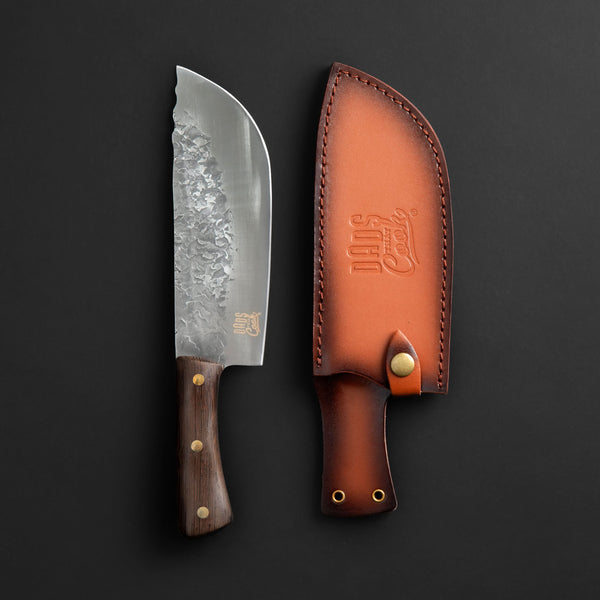
The tomato is rolling away. The chicken skin will not give. So you press harder, angle the blade a little more, and try to force the cut. That is the moment many kitchen injuries happen. Can dull knives cause injuries? Absolutely - not because a dull blade is somehow more dangerous on its own, but because it makes you work harder and gives you less control.
A sharp knife bites into food where you place it. A dull knife skates, tears, and suddenly releases. For the dad handling a brisket before the cookout or chopping onions while the family gets hungry, that difference matters. Strong hands and good instincts help, but the right edge makes every move safer.
Can Dull Knives Cause Injuries? Here Is Why
The short answer is yes. A dull knife often requires extra downward force to cut through food. More force means more tension in your hand, wrist, and shoulder. It also means that if the blade slips off the food, it can travel farther and faster than you expected.
Think about cutting a ripe tomato. A sharp knife breaks the skin cleanly, then glides through the flesh. A dull blade can slide across that smooth skin instead of penetrating it. The same thing happens with peppers, onions, squash, raw chicken skin, and the slick fat cap on a steak or roast. When the blade does not grip, it looks for another path. Too often, that path is toward your fingers.
Dull blades can also cause injuries through fatigue. If you spend 20 minutes muscling through vegetables or trimming a large cut of meat, your grip gets tighter and your focus drops. Cooking should feel capable, not like arm day at the gym. Let the edge do the work.
There is one nuance worth knowing: a sharp knife can still cut you badly. Sharpness is not a free pass to get careless. But with sound technique, a sharp knife is more predictable. Predictability is the real safety advantage.
The Warning Signs Your Knife Needs Attention
You do not need a lab test to tell when a knife has lost its edge. Your food will tell you first. If your knife crushes a tomato before it slices it, rips herbs instead of making clean cuts, or leaves ragged edges on onions, it needs maintenance.
Pay close attention when prepping proteins. A knife that catches on chicken skin, drags through pork fat, or shreds a cooked steak rather than slicing it cleanly is no longer giving you control. That can ruin the presentation of a meal, but more importantly, it encourages the dangerous habit of pushing harder.
Paper tests are useful, but they are not the whole story. A blade might cut a sheet of paper and still perform poorly on a slippery tomato or a thick-skinned pepper. Test your knife on the foods you actually cook. If it takes repeated sawing or forceful pressure, sharpen it.
A few physical clues matter too. Look for shiny, flat spots along the edge, tiny chips, a bent tip, or corrosion. These issues can affect how the blade tracks through food. If the knife has significant damage, a basic pull-through sharpener may not be the answer. It may need professional sharpening or replacement.
Sharp, Honed, and Safe Are Different Things
Many home cooks use “honing” and “sharpening” as if they mean the same thing. They do not.
Honing realigns a slightly rolled edge. With regular use, the ultra-thin cutting edge can bend to one side. A honing steel helps bring it back into line, restoring some of the clean cutting feel. It does not remove much metal or build a brand-new edge.
Sharpening removes a small amount of metal to create a fresh cutting edge. That is what a knife needs when honing no longer improves performance. How often depends on the steel, how much you cook, what you cut, and how you store your knives. A dad cooking dinner most nights and firing up the smoker on weekends will need more regular attention than someone who only uses a chef knife twice a week.
Do not chase razor-blade sharpness at the expense of durability. A very thin edge can feel incredible, but it may chip if you use it on hard foods, frozen meat, bones, or glass cutting boards. For everyday kitchen work, aim for a clean, stable edge that matches the job.
Build a Safer Cutting Setup
A sharp blade is only half the equation. The surface, your stance, and your habits determine whether that blade stays under control.
Start with a board that does not move. Put a damp kitchen towel under a cutting board if it slides on the counter. Use wood or quality plastic rather than glass, ceramic, marble, or granite. Hard surfaces beat up the edge, make food slide around, and can turn even a good knife into a dull one fast.
Keep your work area clear. Do not leave utensils, packaging, or dirty pans crowding the space where you are cutting. Give yourself room to move your elbows and place your ingredients. If you are cooking with kids nearby, make a clear no-go zone around the board. Teaching them to respect the workspace is part of feeding the family well.
Use the claw grip whenever your non-knife hand is near the blade. Curl your fingertips inward, keep your knuckles facing the knife, and use those knuckles as a guide. The blade should rest against them lightly as it moves. It can feel awkward at first, but it is one of the most useful kitchen habits you can build.
Cut away from your body when possible, especially when trimming meat or opening packaging. Never try to catch a falling knife. Step back and let it fall. A damaged floorboard is cheaper than a trip to urgent care.
Match the Knife to the Job
Trying to make one dull, undersized knife do everything is where trouble starts. Use a chef knife for chopping, slicing, and general prep. Use a boning knife for trimming silver skin, working around joints, and separating meat with precision. Use a cleaver for jobs it is designed to handle, such as larger vegetables and appropriate cuts of meat.
The trade-off is simple: more specialized tools take up more space and need their own care. But they also prevent awkward cuts. A long, rigid chef knife gives you a better path through an onion than a small utility blade. A narrow boning knife gives you more control around a rack of ribs than forcing a broad blade into tight spaces.
For carving cooked meat, make sure the blade is sharp before the guests arrive. Sawing through a resting roast or brisket can squeeze out juices, shred the bark, and send the blade wandering. Clean slices look better on the platter and keep your hands out of trouble.
Full-tang knives with a balanced handle can help reduce fatigue because they feel stable in the hand. But no handle design can overcome bad technique or a neglected edge. Treat good gear like the workhorse it is: maintain it, store it properly, and use it with purpose.
Habits That Keep an Edge Working
Knife care does not need to become a weekend project. A few smart habits go a long way:
- Hand-wash knives promptly, then dry them completely. Dishwasher heat, harsh detergent, and loose contact with other utensils can damage an edge.
- Store blades in a knife block, drawer organizer, magnetic strip, or blade guard. Tossing them into a drawer dulls the edge and creates a surprise for the next hand reaching in.
- Use the right board and avoid cutting through bones unless the knife is built for it.
- Hone regularly if your knife responds well to it, then sharpen when honing stops bringing back clean cuts.
- Wipe wet or acidic residue from the blade during long prep sessions, especially after working with citrus, tomatoes, or marinades.
If a Cut Happens, Stop Cooking
Even careful cooks get nicked. Do not power through because the burgers are on the grill. Set the knife down, apply firm direct pressure with a clean cloth or gauze, and assess the wound.
Seek urgent medical care for a deep cut, bleeding that will not stop after steady pressure, numbness, trouble moving a finger, a gaping wound, or a cut caused by a dirty or contaminated blade. When in doubt, get it checked. The meal can wait. Your hand is part of the equipment.
A sharp knife, a stable board, and a calm setup are not fancy chef moves. They are the foundation of cooking with confidence. Keep your edge ready, keep your fingers protected, and make the kind of clean cuts that put better food on the table - again and again.