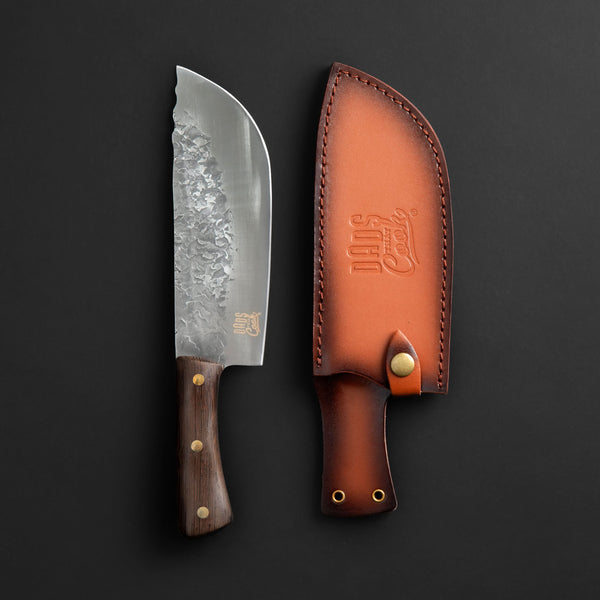
A knife should not feel like the weak link when dinner is on the line. Whether you are breaking down a rack of ribs, trimming brisket, slicing a roast, or knocking out weeknight prep, full tang knife benefits show up where they count: in your hand, at the cutting board, and on the plate.
A full tang knife is built with one continuous piece of steel that runs from the blade through the handle. That construction gives a hardworking cook more than a tough-looking tool. It creates a knife that can feel steadier, more controlled, and more prepared for years of serious kitchen and grill duty.
What Full Tang Construction Actually Means
The tang is the part of the blade steel that extends into the handle. On a full tang knife, that steel reaches all the way to the end of the handle. Depending on the handle design, you may see it exposed along the sides or at the butt of the knife.
This is different from a partial tang, where the steel stops somewhere inside the handle. Partial tang knives can work well for light jobs, especially when they are well made. But they generally have less steel supporting the handle, which matters when the knife is asked to do more than slice a soft tomato.
For cooks who want one dependable knife for daily prep, proteins, and bigger weekend meals, full tang construction is a practical feature. It is not decoration. It is the foundation beneath the handle.
Full Tang Knife Benefits You Can Feel
The biggest advantage is not a spec sheet. It is confidence. A quality full tang knife feels connected from blade tip to handle. That connection helps when you need clean, deliberate cuts instead of sawing, slipping, or fighting the tool.
Better balance for cleaner cuts
A full tang adds material through the handle, which often gives the knife a more balanced feel. The exact balance point depends on blade shape, handle materials, and overall design, but the goal is simple: the knife should not feel wildly blade-heavy or flimsy in the grip.
Good balance reduces the effort required to guide the blade. When you are mincing onions, slicing peppers, or making long passes through a cooked tri-tip, a balanced knife moves with your hand instead of working against it. That means smoother cuts and less fatigue over a long prep session.
This matters even more with larger blades. An 8-inch cleaver or a substantial chef knife needs enough handle presence to feel planted. You want power available, but you also want the ability to stop and steer the blade with precision.
More control around meat, joints, and bone
Meat prep exposes weak knives fast. Trimming silver skin, separating chicken joints, removing fat caps, and slicing steaks all demand control. A full tang gives the handle and blade a more unified feel, helping you direct pressure where it belongs.
That does not mean a full tang turns every knife into a bone cleaver. Blade geometry still rules the job. A thin boning knife is made for flexibility and close work around joints. A chef knife handles general prep. A cleaver brings more weight to heavier cutting tasks. But when the blade meets resistance, full tang construction helps the knife feel composed in your hand.
For the dad cooking for a crowd, that composure matters. You are not just making food. You are timing sides, watching the grill, keeping hungry people happy, and trying to get every slice on the platter before the first guest asks for seconds.
Durability that stands up to real use
A knife handle takes more abuse than most people realize. It gets wet, gets bumped against boards, lands in a sink when someone ignores your kitchen rules, and gets gripped hard during demanding cuts. A full tang provides steel reinforcement through that handle.
That support can reduce the risk of the blade and handle feeling disconnected over time. It also gives the handle scales or grips a stronger structure to attach to. When a knife is properly assembled with quality materials, the result is built for repeat use rather than occasional display.
Durability is one of the strongest full tang knife benefits, but keep the claim honest: full tang does not make a knife indestructible. Do not twist a blade in a joint, pry open cans, or toss a good knife into the dishwasher. Strong gear still deserves smart use.
A more secure, confident grip
The tang itself is inside the handle, but it affects what you feel outside. More continuous steel can make a knife feel solid when you grip it, particularly during firm downward or forward cutting motions.
That solid feel is valuable when your hands are greasy from seasoning a pork shoulder or slick from rinsing produce. A well-shaped handle, sensible texture, and proper knife technique matter too. Still, a full tang gives the handle a stable backbone that supports secure work.
For gift buyers, this is an easy benefit to understand. A good knife is not just something Dad unwraps and admires. It becomes the tool he reaches for when it is his turn to make the family dinner happen.
Full Tang Does Not Mean Every Knife Is the Same
Here is the truth: a full tang is a strong sign of capable construction, not an automatic guarantee of a great knife. Steel quality, heat treatment, edge angle, handle ergonomics, blade grind, and fit and finish all matter.
A poorly sharpened full tang knife can still cut badly. A cheaply made handle can still feel uncomfortable. A blade with the wrong shape for the task can still make prep harder than it needs to be.
There is also a weight trade-off. Some cooks prefer the planted feel of a full tang chef knife. Others want a lighter knife for fast vegetable work or delicate slicing. Traditional Japanese-style knives, for example, may use lighter handle construction and can be excellent tools in the right hands.
The smart move is to match the knife to the work you actually do. If you cook substantial meals, prep a lot of proteins, and want a durable all-around tool, a full tang design makes a strong case. If you only want a feather-light slicer for occasional use, it may not be your priority.
How to Get the Most From a Full Tang Knife
Construction gives you a foundation. Technique and care turn that foundation into better food. Keep your blade sharp, use a stable wood or quality composite cutting board, and give each knife a job it is designed to handle.
Use a chef knife for chopping, slicing, and most prep. Reach for a boning knife when you need to work close to bones or trim meat precisely. Use a cleaver only when its heavier blade suits the task. Let the knife do the cutting instead of forcing it with side-to-side twisting.
After cooking, hand-wash the knife, dry it right away, and store it so the edge is protected. Sharpening restores the cutting edge, while regular honing can help maintain alignment between sharpenings. A sharp knife is safer because it cuts predictably with less pressure.
At Dads That Cook, full tang construction belongs in the conversation because it supports the kind of cooking that earns respect: steady prep, clean cuts, and food served with pride.
Choose the Knife That Matches Your Table
If you are building a kitchen kit from scratch, start with the workhorse. A full tang chef knife can cover a huge share of everyday jobs, from chopping herbs to slicing cooked chicken. Add a boning knife if meat and barbecue are regular parts of your rotation, then consider a cleaver when bigger cuts and bold prep are your style.
Pay attention to how the handle feels in your hand. The best knife should feel secure without forcing your wrist into an awkward position. A heavier knife is not automatically better, and neither is the lightest option. The right one makes you want to keep cooking.
The next time you slice into a rested steak or prep Sunday dinner, notice whether your knife feels like a partner or a problem. Choose gear with a solid foundation, keep it sharp, and put it to work feeding the people gathered around your table.