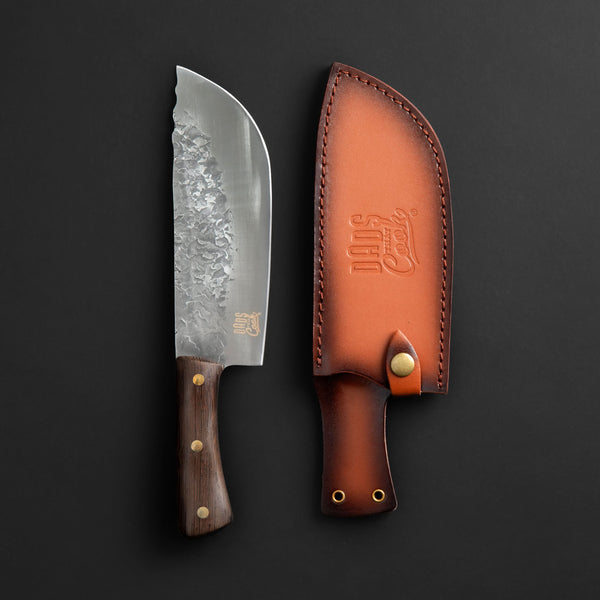
A brisket does not care what your knife cost. But your hands will care when you are trimming fat, separating ribs, chopping onions for the sauce, and slicing that finished bark in front of a hungry crew. The forged versus stamped knives debate matters because the blade in your hand changes how controlled, comfortable, and confident those jobs feel.
The quick answer: neither construction method automatically makes a knife great. A well-made stamped knife can be sharp, durable, and a smart everyday tool. A well-made forged knife can bring satisfying balance, strength, and long-haul performance. The right call comes down to how you cook, what you cut, and whether you want a lighter workhorse or a more substantial blade built to take charge.
What “forged” and “stamped” actually mean
A forged knife begins as a piece of steel that is heated and shaped under pressure. The blade is then ground, heat-treated, sharpened, and finished. Traditional forged knives often have a bolster, the thicker section between blade and handle, though a bolster is not proof that a knife is forged.
A stamped knife is cut from a flat sheet or roll of steel, almost like a precise cookie cutter cuts dough. It is then heat-treated, ground, sharpened, and fitted with a handle. “Stamped” does not mean flimsy. It describes how the blade starts, not whether the finished knife deserves a spot in a serious kitchen.
That distinction is worth remembering. Steel type, heat treatment, blade geometry, handle construction, fit and finish, and quality control can matter just as much as whether the blank was forged or stamped.
Forged versus stamped knives: the feel changes first
Pick up a forged chef knife and you will often notice the weight before anything else. Many forged blades have more material through the spine and around the handle. That can create a planted, powerful feel when you are driving through dense vegetables, breaking down a large roast, or working through a pile of prep.
For some cooks, that extra presence is the point. The knife feels steady. It can make long, controlled slices through tri-tip or a pork loin feel less twitchy. A heavier blade also carries momentum, which helps with a clean chopping rhythm.
Stamped knives are usually thinner and lighter. They tend to move quickly, feel less tiring during extended prep, and offer nimble control for fine work. If you are mincing garlic, trimming silver skin, slicing strawberries for the kids, or making dozens of precise cuts with a boning knife, less weight can be a real advantage.
There is no universal winner here. A dad who cooks big Sunday meals and loves the solid authority of a heavier chef knife may prefer forged. The guy who preps every night after work may want a lighter stamped blade that stays quick in hand. The best knife is the one you reach for without thinking twice.
Strength is not just about forging
Forged knives have a reputation for toughness, and premium forged knives can absolutely be built for hard use. But construction tells only part of the story. A knife with good steel, a properly executed heat treatment, and a strong full tang can stand up to years of serious cooking whether it was forged or stamped.
Full tang means the steel extends through the handle rather than stopping at its base. It can improve balance and provide confidence when you are handling heavier tasks. Still, full tang and forged are not the same thing. You can find stamped full-tang knives, and you can find forged knives with other handle constructions.
The bigger concern is using any knife for the wrong job. A chef knife is made for slicing, chopping, and dicing. It is not a cleaver for hacking through thick bones, a screwdriver for opening a can, or a pry bar for frozen food. Treat a quality blade with respect and it will stay in the fight much longer.
Sharpness comes from the edge, not the label
A forged knife is not guaranteed to be sharper than a stamped knife right out of the box. Sharpness depends on how thin the maker grinds the edge, how well the steel is heat-treated, and how carefully the final edge is sharpened.
In fact, stamped blades are often thinner behind the edge, which can make them slice with very little resistance. That is a huge win for tomatoes, herbs, boneless proteins, and precise vegetable work. A thin blade can glide through food instead of splitting it apart.
Forged knives may have a thicker, more substantial profile. That can make them feel stronger and more stable, especially with demanding prep. But a thick blade that is poorly ground can wedge in foods. This is why good geometry beats a marketing label every time.
For clean cuts, keep your blade sharp. Use a honing rod only if it is appropriate for your knife and you know how to use it. A quality sharpener or professional sharpening service removes metal to restore the edge when honing is no longer enough. A dull knife forces pressure. Pressure leads to ragged food and more chances for your hand to slip.
Price and value: buy for the work you do
Stamped knives are generally less expensive to produce, which can make them a strong value. They are a smart choice for building out a kitchen, adding specialty blades, or giving a new cook capable gear without overloading the budget. A good stamped boning knife, for example, can be an outstanding tool because flexibility and agility matter more than heft for many trimming jobs.
Forged knives often cost more because shaping and finishing the blade can require more labor and material. For a cook who wants one primary chef knife with a balanced, substantial feel, paying more for a quality forged blade can make sense. It becomes the tool that handles weeknight chicken, weekend prep, holiday carving, and everything between.
Do not buy a forged knife just because it sounds more serious. And do not pass over a stamped knife because someone called it entry-level. Buy the blade that feels right, performs the task well, and fits the way you feed your people.
Choose your knife by the job
If your cooking is centered on big proteins, thick root vegetables, and confident all-purpose prep, a forged chef knife may be your favorite daily driver. Its weight and balance can make it feel like a dependable extension of your hand.
If you value speed, fine control, and reduced hand fatigue, a quality stamped knife may be the better match. It can be especially useful for delicate slicing, quick vegetable prep, and specialty tasks that require a lighter touch.
Many strong home kitchens use both. Keep a substantial chef knife for the heavy lifting, a nimble boning knife for trimming meat, a cleaver designed for its intended work, and steak knives that make serving feel as good as cooking. That is not overkill. That is having the right tool ready when dinner gets real.
What to check before you buy
Forget the buzzwords for a minute and get hands-on if you can. Hold the knife with a pinch grip, placing your thumb and index finger near the base of the blade. Does the handle feel secure? Does the balance point work with your natural grip? Is the spine smooth, or does it create hot spots in your fingers?
Look at the blade edge-on. A straight, even grind is a good sign. Check that the handle scales fit cleanly against the steel, with no gaps or sharp edges. Ask what steel is used, how the knife should be maintained, and whether it is intended for the jobs you have in mind.
Then think beyond the first slice. Stainless steel is popular because it resists corrosion, but it still deserves basic care. Hand-wash your knife, dry it right away, and store it where the edge will not bang into other tools. Use wood or quality plastic cutting boards, not glass, stone, or ceramic. That small routine protects any blade, forged or stamped.
A great knife should make you want to cook more. It should help you trim cleaner, chop faster, carve with pride, and put a better plate in front of the family. Choose the construction that feels right in your hand, keep the edge sharp, and get back to what matters: sear, slice, repeat.