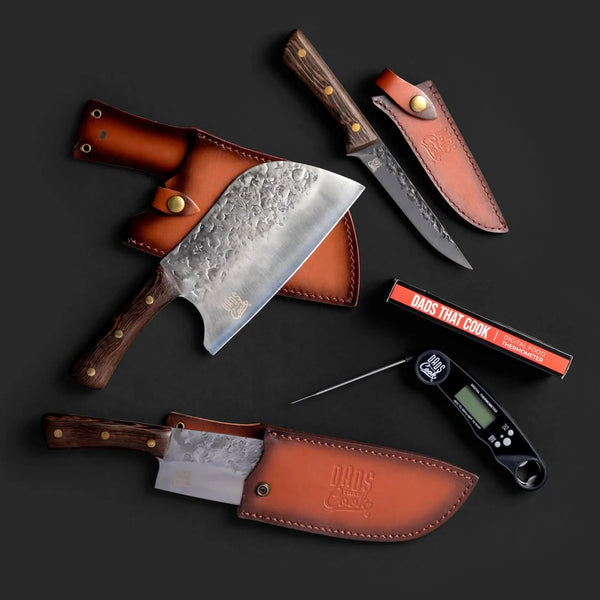
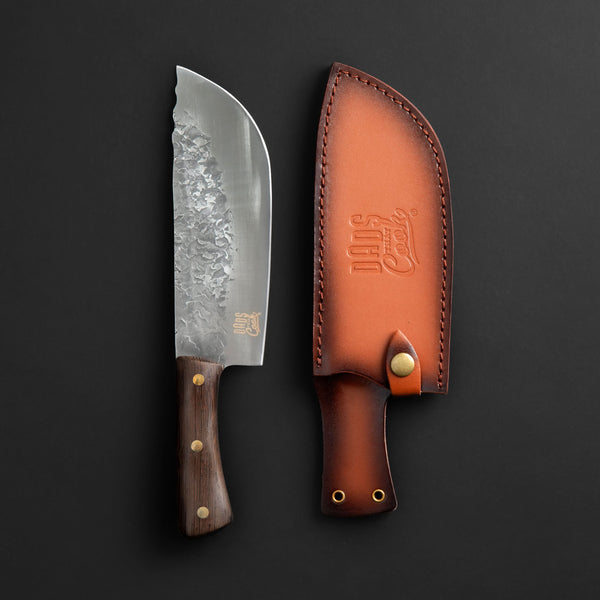
A dull, flimsy knife turns a great dinner into a chore. It crushes tomatoes, tears herbs, slides on onion skins, and makes carving a smoked brisket feel like a wrestling match. This kitchen knife buying guide is built for dad chefs who want better control at the cutting board, cleaner cuts on the grill, and gear that is ready when the family is hungry.
The good news: you do not need a wall full of blades to cook like you mean it. You need a few capable knives that feel right in your hand, hold up to real work, and match what you actually make. Buy for the meals on your table, not for a collection that gathers dust.
Start With the Jobs You Cook Most
Before comparing steel grades or counting knives in a block, think about your weekly lineup. Are you chopping vegetables for weeknight tacos? Breaking down whole chickens? Trimming ribs, slicing tri-tip, or carving a holiday roast? A knife earns its place by doing one of those jobs well.
For most home cooks, a chef knife is the starting point. Its broad blade, curved edge, and pointed tip can handle onions, peppers, potatoes, herbs, garlic, and boneless proteins. A 7.5- to 8-inch chef knife gives most adults enough length for confident prep without feeling oversized on a standard home cutting board.
If meat is your main event, build around that. A cleaver gives you power and a wide blade for moving chopped ingredients from board to pan. A boning knife brings control where a big blade cannot, helping you work around joints, trim silver skin, and separate meat from bone without hacking away at good food. Steak knives finish the job at the table, where a properly cooked ribeye deserves a clean slice instead of a sawing match.
One good knife used often beats six specialty blades you never reach for.
The Kitchen Knife Buying Guide: Construction First
A knife can look tough in a product photo and still disappoint the first time it meets a sweet potato. Construction tells you far more than a flashy finish or a dramatic name.
Choose full-tang when durability matters
The tang is the section of steel that extends into the handle. On a full-tang knife, the metal runs the full length of the handle. That design usually creates a stronger, more stable tool with better balance from blade to grip.
For dads who cook frequently, full-tang construction is a smart standard. It matters when you are bearing down through dense vegetables, portioning large cuts of meat, or putting in long prep sessions before guests arrive. It also gives the knife a planted, capable feel. You should be guiding the blade, not fighting to keep it steady.
Look for stainless steel you will maintain
Stainless steel is a practical choice for a busy home kitchen. It resists corrosion better than many high-carbon steels and handles the reality of sink splashes, grill-side prep, and cleanup after a crowd. That does not mean it is maintenance-free. Wash it by hand, dry it right away, and do not leave it sitting under a pile of wet dishes.
Some premium steels can take an extremely sharp edge but demand more care or cost more. That can be worthwhile for a knife enthusiast. For most family cooks, dependable stainless steel with a sensible sharpening routine is the better trade. It keeps cooking fun instead of turning every meal into equipment maintenance.
Balance Beats Bragging Rights
The best knife is not necessarily the heaviest, longest, or most expensive one. It is the one that gives you control.
Hold a knife as though you are about to chop. A comfortable grip lets your thumb and index finger pinch near the base of the blade while the rest of your hand wraps naturally around the handle. The knife should not feel blade-heavy enough to pull you forward or handle-heavy enough to make precise cuts awkward.
Handle shape matters more than many buyers expect. Smooth contours reduce hot spots during a long prep session, while a secure texture can help when your hands are wet or greasy. Bigger hands may prefer a more substantial handle, but oversized grips can reduce fine control. If you are buying a gift, a versatile chef knife with a balanced, medium-profile handle is a safer bet than an ultra-specialized blade.
Do not confuse weight with quality. A cleaver should have enough presence to do its work. A boning knife should be nimble. A chef knife should feel like an extension of your hand. Different jobs call for different muscle.
Build a Hardworking Knife Lineup
You can cover nearly every meal with four key knife types. The right order depends on your cooking style and budget.
1. Chef knife for everyday prep
This is the workhorse. Use it for chopping, slicing, dicing, mincing, and portioning boneless meats. If you are buying only one quality knife, make it a chef knife. Learn its rhythm, keep it sharp, and it will carry most weeknight dinners.
2. Cleaver for big prep and bold cooking
A cleaver is not just for dramatic chopping. Its tall blade gives you knuckle clearance, its wide face helps scoop ingredients, and its weight helps make quick work of large vegetables and substantial cuts. It is especially satisfying when prep involves cabbage, squash, pork shoulder, or a mountain of fajita vegetables.
That said, not every cleaver is meant for bones. Check the maker's intended use. Use a heavy-duty cleaver only as designed, and do not twist a blade through hard joints or frozen food.
3. Boning knife for clean protein work
A 6-inch boning knife is a game changer for anyone serious about steak, chicken, fish, ribs, or barbecue. Its narrow blade can follow contours closely, so you remove less usable meat and make cleaner portions. Flexibility varies by knife. A stiffer blade suits tougher work and larger cuts, while a more flexible one is useful when working close to fish bones.
4. Steak knives for the final cut
A great meal can lose some of its shine when the table knives crush a rested steak. Good steak knives glide through a crust without shredding the center you worked hard to cook properly. They are also an easy upgrade for family dinners and an excellent addition to a gift bundle.
Sharpness Is a Safety Feature
A sharp knife needs less force. Less force means fewer slips, more accurate cuts, and food that looks as good as it tastes. When a blade is dull, people compensate by pushing harder. That is when onions roll, tomatoes split, and fingers get too close to trouble.
Sharpness is not permanent. Every knife eventually needs attention, even a premium one. A honing tool helps realign an edge between sharpenings, but it does not replace sharpening. A sharpener removes a small amount of material to rebuild the edge when honing no longer brings the blade back.
How often you sharpen depends on use, cutting surface, and technique. A dad cooking several times a week may need to hone regularly and sharpen every few months. If the knife struggles to slice paper, glides poorly through a tomato, or leaves ragged edges on herbs, it is telling you something.
Avoid glass, ceramic, marble, and stone cutting surfaces. They are hard on an edge. Wood and quality plastic boards are much kinder to your knives and easier on your hands during long prep sessions.
Do Not Buy a Block Just Because It Is Full
A giant knife block can feel like a serious purchase, but quantity is not the same as capability. Many sets include duplicate utility blades, awkward specialty shapes, and knives that are rarely used. You pay for all of them, then still reach for the same two pieces.
A focused kit gives you more value. Start with a full-tang chef knife and add based on the food you cook: a cleaver for high-volume prep, a boning knife for proteins, and steak knives for serving. Add a sharpener and a solid cutting board, and you have a setup built for real meals.
This approach also makes gift buying easier. Instead of guessing whether Dad needs a 14-piece set, choose a useful core knife or a well-matched bundle that supports his favorite kind of cooking. For the guy who owns the grill, trims his own brisket, and takes Sunday dinner seriously, practical tools land harder than novelty gear.
Take Care of the Blade That Takes Care of Dinner
Never toss quality knives loose into a drawer. The edge can bang against other utensils, and reaching in becomes a bad gamble. Store them in a knife block, on a magnetic strip, in blade guards, or in a dedicated drawer organizer.
Hand-wash your knives with mild soap, rinse them, and dry them immediately. Dishwashers are rough on blades and handles because of heat, moisture, harsh detergent, and collisions with other items. A few extra seconds at the sink protects the tool you paid for.
Use the right blade for the right task. Do not pry open cans, cut through bone with a chef knife, scrape food off the board with the sharp edge, or use your knife as a screwdriver. Turn the blade over and use the spine to move chopped food. Small habits keep an edge alive.
The goal is not to baby your equipment. It is to respect it enough that it stays ready for the next round.
A capable knife puts you in command of the meal. It lets you prep faster, cut cleaner, and spend less time fighting your tools while people wait for dinner. Pick the blades that fit your hands and your menu, keep them sharp, and put them to work. Then gather the family, fire up the grill, and serve something worth talking about.