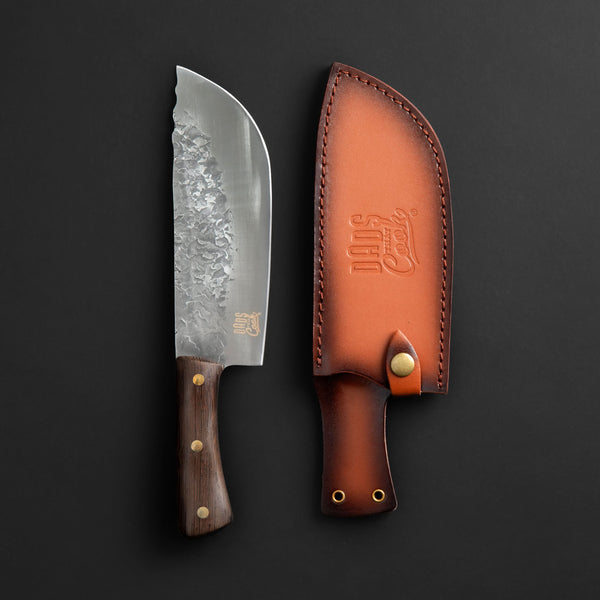
A good chef knife is not kitchen decoration. It is the blade you reach for when onions need dicing, chicken needs breaking down, herbs need chopping, and a big family dinner is waiting on the cutting board. Get this one tool right, and every meal moves faster, feels better, and comes out cleaner.
That does not mean the biggest knife or the flashiest blade wins. The right chef knife has to earn its place in your hand. It needs enough weight to power through sweet potatoes, enough control for garlic, and enough balance that your wrist is not cooked before the food is.
What a Chef Knife Is Built to Do
A chef knife is the all-purpose workhorse of the kitchen. Its broad blade, curved edge, and pointed tip give it range. You can slice, dice, mince, chop, and make controlled cuts through boneless proteins, fruits, vegetables, and herbs without swapping tools every two minutes.
The curved belly is there for rocking motions when you are chopping herbs or moving through a pile of onions. The pointed tip handles detail work, like trimming a pepper or starting a precise cut in a roast. The tall blade gives you knuckle clearance and makes it easier to scoop chopped food off the board.
It is not the right tool for every job. Do not use it to cut through bones, crack open frozen food, pry apart joints, or hack through a thick squash with reckless force. That is how edges chip and wrists get hurt. Bring in a cleaver for heavy-duty work and a boning knife when you need to follow the shape of meat or fish.
But for most prep, one capable chef knife handles the action. Sear. Slice. Repeat.
Choosing a Chef Knife That Feels Right
The best length depends on what you cook, how much space you have, and how confident you are with a larger blade. An 8-inch knife is the classic choice because it gives you plenty of cutting edge without feeling oversized for most home kitchens. A 7.5-inch chef knife lands in a sweet spot for many cooks: serious enough for brisket prep and weeknight vegetables, nimble enough for everyday control.
Do not choose by length alone. Pick up the knife, if you can, and pay attention to balance. A well-balanced blade should not feel like it is dragging your hand toward the tip or pulling it back toward the handle. The weight should work with you when you chop, not make you fight for control.
Full tang construction matters
A full-tang knife has steel running from the blade through the handle. That construction creates strength, stability, and a more connected feel in the hand. When you are cutting a pile of vegetables or slicing a steak roast, you want the knife to feel like one solid piece of equipment.
A lightweight stamped knife can be useful for certain tasks, especially if you prefer a quick, agile blade. Still, a quality full-tang chef knife gives many home cooks more confidence because it brings durability and balance to the board. It is built for regular use, not just the occasional holiday meal.
Stainless steel is practical steel
Stainless steel makes sense for a hard-working home kitchen. It stands up well to moisture, resists rust when cared for properly, and does not demand the ritual of a high-maintenance carbon steel blade. That matters when dinner is busy and the sink is full.
Steel type is only part of the story. Heat treatment, grind, edge geometry, and sharpening all affect performance. A premium blade that stays dull is still a frustrating blade. Choose quality construction, then protect it with simple habits.
Grip and Control Beat Brute Force
You do not need to grip a chef knife like you are holding onto a runaway grill lid. A firm, controlled hold is stronger and safer than a white-knuckle squeeze.
For most chopping, use a pinch grip. Place your thumb and the side of your index finger on opposite sides of the blade, just ahead of the handle. Wrap your remaining fingers around the handle. This puts your hand closer to the center of the knife and gives you better control over the edge.
Your guide hand matters just as much. Curl your fingertips inward and let your knuckles guide the side of the blade. Keep your fingertips behind the cutting edge. Move the food back a little at a time as you slice. Slow is smooth. Smooth becomes fast.
Use the front half of the blade for precise cuts and the middle section for most chopping. When you mince herbs, keep the tip near the board and rock the blade through the pile. When slicing a tomato or carving boneless meat, use a forward-and-back slicing motion instead of pressing straight down. Let the sharp edge do the work.
Keep the Edge Sharp, Not Just Shiny
A dull knife is not safer. It slides off tough skins, crushes tomatoes, tears herbs, and makes you apply more force than the job requires. A sharp edge bites where you put it. That is control.
Honing and sharpening are different jobs. Honing realigns a slightly rolled edge. It is routine maintenance, not a replacement for sharpening. A few careful passes on a honing rod before a major prep session can help keep the edge tracking straight.
Sharpening removes a small amount of steel to create a new edge. How often you need it depends on how often you cook, what you cut, and how you store the knife. For a busy home cook, a real sharpening session a few times a year may be enough, with honing in between. If the knife crushes a ripe tomato or struggles to slice cleanly through paper, it is asking for attention.
A pull-through sharpener is quick and convenient, though it can remove more material than necessary depending on the design. Whetstones offer more control and can produce an excellent edge, but they take practice. Professional sharpening is a smart call if you want the result without the learning curve. The important part is having a plan instead of waiting until the blade is useless.
The Cutting Board Is Part of the System
A strong knife needs a board that respects its edge. Wood and quality plastic boards are the smart choices for daily prep. Glass, marble, granite, and ceramic may look sharp on a counter, but they are rough on blades. Every chop against a hard surface beats up the edge.
Use a board large enough to give your hands room. If it slides, put a damp kitchen towel underneath it. That small move keeps the board planted and gives you a steadier, safer workspace.
When you finish chopping, use the spine of the blade to move food from the board to the pan. Scraping with the sharp edge dulls it faster and can leave fine metal wear where you do not want it. Treat the edge like the business end it is.
Care That Keeps a Chef Knife Ready
Wash your knife by hand with warm water, mild soap, and a non-abrasive sponge. Dry it right away, especially around the handle and where blade meets handle. Do not toss it in the dishwasher. High heat, harsh detergent, banging against other utensils, and long exposure to moisture are a bad deal for any quality knife.
Storage matters, too. A knife block, magnetic strip, in-drawer knife dock, or edge guard protects the blade and keeps fingers from finding it the hard way. Loose in a drawer is how good edges get damaged and good days get interrupted.
Dads That Cook builds its 7.5-inch full-tang chef knife for the kind of prep that feeds a crowd: confident control on vegetables, clean cuts through proteins, and durable stainless-steel performance that shows up again tomorrow.
Put Your Knife to Work
The fastest way to get comfortable is repetition with real food. Make a batch of salsa and practice uniform dice. Prep a sheet-pan dinner and work through onions, peppers, potatoes, and chicken. Slice a rested tri-tip against the grain and notice what a clean edge does for the final bite.
Do not chase perfection on day one. Chase consistency. Keep the board stable, use a controlled grip, keep the edge sharp, and respect what the blade is built to do. Soon enough, the chef knife will stop feeling like a tool you are learning and start feeling like the tool that helps you lead dinner from the first chop to the last plate.