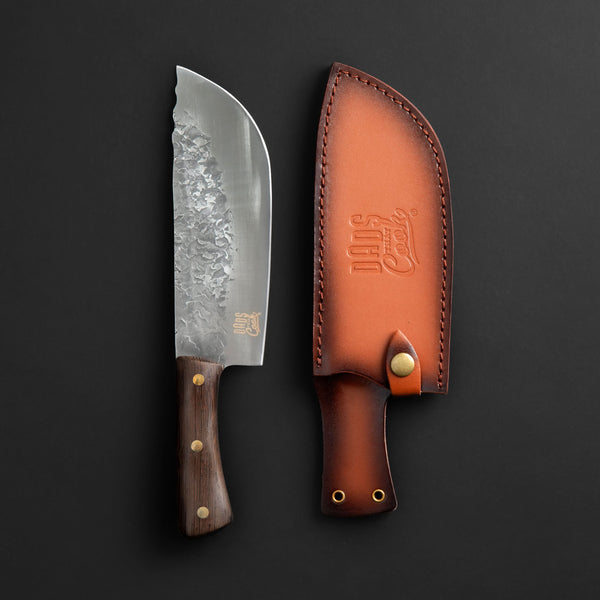
A pile of onions, peppers, carrots, and herbs can either feel like a chore or the start of a great meal. The difference is usually not a fancy gadget. It is a sharp, well-balanced blade that gives you control. The best knives for vegetables make prep faster, safer, and a lot more satisfying - whether you are knocking out Tuesday tacos or building a serious spread for the family.
You do not need a drawer full of specialty steel to cook vegetables well. You need the right core knives, a cutting board that protects the edge, and the discipline to keep those knives sharp. Build that foundation, and you can slice, dice, mince, and chop like you mean it.
The Best Knives for Vegetables Start With a Chef Knife
For most home cooks, the chef knife is the workhorse. A 7.5- to 8-inch blade has enough length to handle cabbage, butternut squash, and a mountain of potatoes without feeling clumsy when you are mincing garlic or dicing an onion. If you buy one knife for vegetable prep, make it a chef knife.
Look for a blade with a gentle curve along the cutting edge. That curve supports a controlled rocking motion for herbs, celery, onions, and leafy greens. A flatter edge can still do great work, but it favors a straight up-and-down chopping style. Neither is automatically better. The right choice depends on how you naturally move your hand at the board.
Balance matters as much as blade length. A knife that feels heavy at the tip can wear out your wrist during a long prep session. One that feels too light may bounce across firm vegetables instead of cutting with authority. Full-tang construction, where the steel runs through the handle, generally gives a knife the solid, planted feel serious prep demands.
A sharp 7.5-inch chef knife from Dads That Cook is built for exactly this kind of everyday control: clean slices through tomatoes, firm pressure through sweet potatoes, and enough balance to keep a big family meal moving.
What a chef knife handles best
Use your chef knife for the bulk of the work: dicing onions, slicing zucchini, chopping broccoli, cutting cauliflower, shaving cabbage, cubing potatoes, and breaking down sturdy greens. It is also the blade to grab when you want uniform pieces that cook at the same rate.
Uniform cuts are not just about looking sharp on the plate. Tiny pieces of onion can burn while oversized chunks stay raw. Evenly cut carrots roast at the same pace. A good knife puts you in command of the result before the pan even gets hot.
Add a Paring Knife for Small, Precise Jobs
The chef knife is the muscle. The paring knife is the fine-control tool. Its short blade is made for work you do in your hands or close to the board: trimming green beans, peeling blemishes from potatoes, coring strawberries, deveining jalapeños, and removing the tough root ends from small vegetables.
Do not try to force a paring knife through a butternut squash or use it for fast chopping. The blade is too short for safe leverage, and the work becomes slower than it needs to be. Let the small knife handle detail work. Let the chef knife do the heavy lifting.
For most kitchens, a 3.5- to 4-inch paring knife is the sweet spot. It feels nimble without becoming flimsy. Keep it sharp, because dull small blades are especially likely to skid when you are working around curved produce.
When a Cleaver Earns Its Spot on the Board
A cleaver is not mandatory for every vegetable task, but it can be a beast when the prep gets big. A broad blade gives you power for dense produce and a wide surface for scooping chopped vegetables from board to skillet. If you make stir-fries, slaws, sheet-pan dinners, or big batches of soup, that extra blade height can be a real advantage.
An 8-inch cleaver is especially useful for cabbage, large onions, squash, and piles of greens. The key is using the right kind of cleaver. A kitchen cleaver with a thinner, sharper edge is designed for slicing and chopping. A heavy bone cleaver is a different tool altogether and is not the right answer for delicate tomatoes or fine herb work.
There is a trade-off. A cleaver can feel intimidating or oversized if you are new to cooking. Start with your chef knife if it is the blade you trust. Add a cleaver when you want more board presence, more scooping power, and a tool that makes large-volume prep feel downright fun.
Skip the Gadget Trap
Vegetable knives, tomato knives, santokus, nakiris, serrated utility knives - there is no shortage of options. Some are excellent. Most are optional.
A nakiri deserves a quick mention because it is purpose-built for vegetables. Its flat, rectangular blade excels at clean push cuts and has plenty of surface area for transferring food. It is a strong choice for someone who preps produce every day and prefers lifting the blade straight up and down instead of rocking it. But it does not replace a chef knife for every job. Its flatter profile is less natural for rocking through herbs, and the squared tip is less useful for detail work.
A serrated knife can help with very ripe tomatoes, though a truly sharp straight-edged chef knife should glide through them without crushing the flesh. Before buying another specialty blade, sharpen the knife you already own. That move solves more kitchen problems than a drawer full of single-purpose tools.
Sharpness Is the Real Performance Upgrade
The best knife shape cannot save a dull edge. A dull knife needs more force, tears delicate vegetables, and is more likely to slip off a tough skin. Sharp steel bites where you place it. That gives you cleaner cuts and better control.
Test your blade on a tomato or a sheet of paper. If it squashes the tomato before breaking the skin, or snags and rips through paper, it is time for maintenance. Honing and sharpening are not the same thing. Honing realigns an edge that has bent slightly through use. Sharpening removes a small amount of material to create a fresh edge. Regular honing can stretch the time between sharpenings, but it cannot restore a blade that has gone truly dull.
Use a sharpener suited to your knife and follow its angle guidance. Do not drag good steel through a cheap pull-through sharpener without knowing what it is doing to the edge. A proper sharpening routine protects your investment and keeps prep from becoming a fight.
Use the Blade Like a Pro, Not a Hero
Great vegetable prep is built on simple habits. Start with a stable cutting board. If it slides, put a damp kitchen towel underneath it. Then create a flat side on round vegetables before you slice further. Cut a potato, onion, or zucchini in half so it sits securely instead of rolling around the board.
Keep your guiding hand in a claw shape, with fingertips tucked back and knuckles facing the blade. Let the side of the knife rest lightly against those knuckles as you cut. This is not flashy. It is how you work fast without feeding the bandage box.
Avoid twisting the blade sideways in hard vegetables, scraping the board with the sharp edge, or cutting directly on stone, glass, or ceramic. Those habits wreck an edge fast. Use the spine of the knife or a bench scraper to move chopped vegetables. Your blade will stay sharper, and your next meal will start stronger.
Build the Two-Knife Setup That Covers Almost Everything
If you are starting from scratch, get a quality chef knife and a paring knife. That pairing handles nearly every vegetable task a home cook faces. Add a kitchen cleaver if you regularly tackle large batches, tougher produce, or stir-fry nights where speed matters.
The point is not to own more gear. The point is to own gear that shows up when dinner needs to happen. A capable knife should feel good in your hand, hold an edge, and make you want to cook one more thing.
Tonight, put a sharp blade to work. Chop the onions clean, slice the peppers even, and build a plate your people will remember. That is how a simple pile of vegetables turns into a meal worth gathering around.