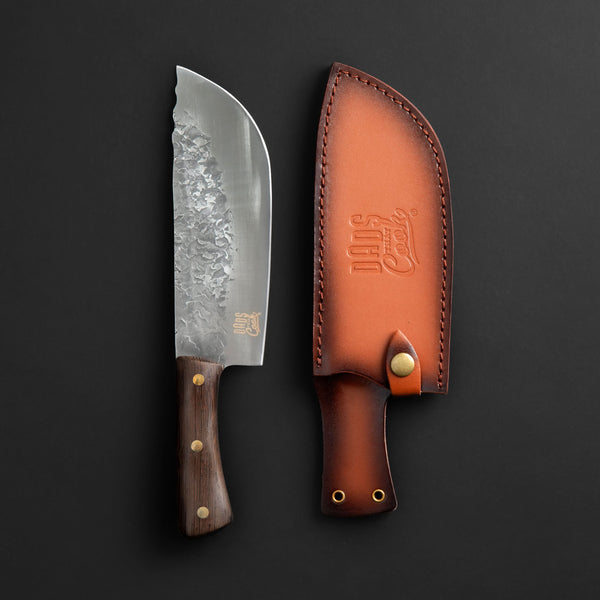
The difference shows up when dinner is already moving. One hand is holding a slippery onion steady, the grill is heating up, and a pile of chicken thighs still needs trimming. A good knife should not make that moment harder. This full tang chef knife review looks at what full-tang construction actually brings to the cutting board, where it earns its keep, and when a heavier, tougher blade may not be the right call.
For dads who cook with purpose, the chef knife is the daily driver. It handles the garlic before breakfast, the vegetables for weeknight tacos, and the roast prep before the whole crew comes over. It needs to feel planted, stay controllable, and take the kind of use that comes with cooking often.
What Full Tang Means When You Are Cooking
A full tang knife has a piece of steel that runs from the tip of the blade through the length of the handle. The handle scales are secured around that steel, rather than being attached to a short extension hidden inside the grip. It is a straightforward construction choice with real consequences: more support, more balance through the handle, and less reason to worry about the blade and handle separating under normal hard use.
That does not automatically make every full tang chef knife superior. Steel quality, heat treatment, edge geometry, handle shape, and factory sharpening matter just as much. A poorly ground full tang knife can still feel thick behind the edge and wedge its way through a potato. A well-made knife with a partial tang can still serve a careful cook for years.
But for the home cook who breaks down proteins, chops dense vegetables, and wants one knife that feels ready for a serious session, full tang construction is a strong foundation. It gives the knife a solid, unified feel. That confidence matters when you are portioning a tri-tip or working through a mountain of onions for chili.
Full Tang Chef Knife Review: The Real Performance Test
Forget the marketing photo for a minute. The best way to judge a chef knife is by the work it does over a week. A capable 7.5- to 8-inch chef knife should make clean, repeatable cuts without forcing your wrist or asking you to fight the food.
Balance creates control
Full tang construction often shifts some weight toward the handle. Done right, that makes the knife feel balanced around the pinch grip, where your thumb and forefinger sit near the blade's heel. The blade should not feel like it is dragging your hand forward. It also should not feel handle-heavy, as if you need to push the cutting edge down into the board.
Good balance helps with the tasks that separate casual slicing from real prep. You can rock through herbs, guide the blade through carrots, and make thinner onion slices with less effort. The knife becomes an extension of your hand instead of a tool you have to wrestle.
There is a trade-off. A full tang blade generally feels more substantial than a lightweight stamped knife. Some cooks love that authority. Others, especially anyone with hand fatigue or smaller hands, may prefer a lighter knife for long prep sessions. Weight is not a trophy. Control is the goal.
Edge geometry decides how food cuts
A sharp knife gets attention. A thin, well-shaped edge does the real work. When a chef knife is ground appropriately behind the edge, it passes through tomatoes, peppers, and onions cleanly instead of cracking, tearing, or splitting them apart.
This is where shoppers need to look beyond the words "full tang." A thick blade can be durable, but if it is too thick near the cutting edge, it may struggle with precision work. A chef knife should have enough strength for daily prep while still cutting with authority. It should not be mistaken for a cleaver.
Use the chef knife for chopping, slicing, mincing, and general protein prep. Reach for a cleaver when you need more blade mass for larger cuts or tougher connective work. Use a boning knife when you need to follow bones closely. The right tool makes you faster, safer, and a lot less frustrated.
Handle comfort is not optional
The handle is where a knife earns a permanent place in the kitchen. A full tang gives it structural strength, but the profile determines whether it feels good after twenty minutes of prep. Look for a handle with enough room for a secure grip, smooth transitions where handle meets blade, and no sharp edges that create hot spots in your palm.
For a dad chef moving between the kitchen and the grill, grip security matters even more. Hands get wet. Marinade gets everywhere. Fat from a brisket does not care about your plans. A handle should let you reset your grip quickly and keep the blade under control.
Durability: Built for Work, Not Abuse
A full tang chef knife can take on plenty of serious kitchen duty, but tough does not mean indestructible. The edge is still thin steel. Twist it through a frozen food package, use it to pry apart a chicken joint, or chop straight through hard bone, and you can chip or bend it.
Treat the knife like the precision tool it is. Use a wood or quality composite cutting board. Avoid glass, ceramic, marble, and plates. Hand-wash it after use, dry it right away, and store it where the edge will not bang into other utensils. A magnetic strip, blade guard, or dedicated knife block works far better than tossing it into a drawer.
Regular maintenance keeps a good knife cooking like a good knife. Honing realigns a slightly rolled edge between sharpenings. Sharpening removes a small amount of metal to create a new edge. If your knife slides off a tomato skin or crushes an onion before cutting it, it is time for attention. Do not wait until the blade is completely dull. A sharp knife is more predictable, and predictable is safer.
Who Should Buy a Full Tang Chef Knife?
This style of knife makes the most sense for cooks who want a dependable centerpiece for everyday meals and bigger weekend projects. If you cook meat, prep vegetables from scratch, or take pride in feeding a crowd, the added stability is worth having. It also makes a strong gift because it is useful from day one. A father who already owns grilling gear but uses a tired, bargain-bin kitchen knife will feel the upgrade immediately.
It may be more knife than necessary for someone who only opens meal kits and cuts the occasional lime. That is not a knock. The best kitchen setup matches how you actually cook. But if you are building skills, a well-balanced full tang chef knife can grow with you. Learn a proper pinch grip. Keep the board stable. Let the blade do the work.
A Dads That Cook full-tang chef knife fits this role well for the guy who wants a capable blade without turning weeknight dinner into a formal chef performance. It is about showing up prepared, making cleaner cuts, and serving food you are proud to put on the table.
What to Look for Before You Commit
Start with fit. If possible, hold the knife and use the grip you naturally use. The blade should feel secure without demanding that you squeeze the handle. Next, consider length. A 7.5-inch chef knife offers quick control in tighter kitchens and is plenty capable for daily prep. An 8-inch blade brings a little more reach for larger produce, family-size meals, and proteins.
Then consider your cooking style. If you spend weekends trimming ribs, slicing steaks, and preparing vegetables for the grill, prioritize balance, a comfortable handle, and easy edge maintenance. If fine vegetable work is your favorite part of cooking, pay special attention to how cleanly the edge moves through delicate food.
The flashiest knife is not always the best knife. The keeper is the one you grab without thinking because it is sharp, balanced, and ready when the family asks, "What's for dinner?"
Put that blade to work. Slice the onions thinner. Trim the meat cleaner. Build the meal that brings everybody back to the table for one more plate.