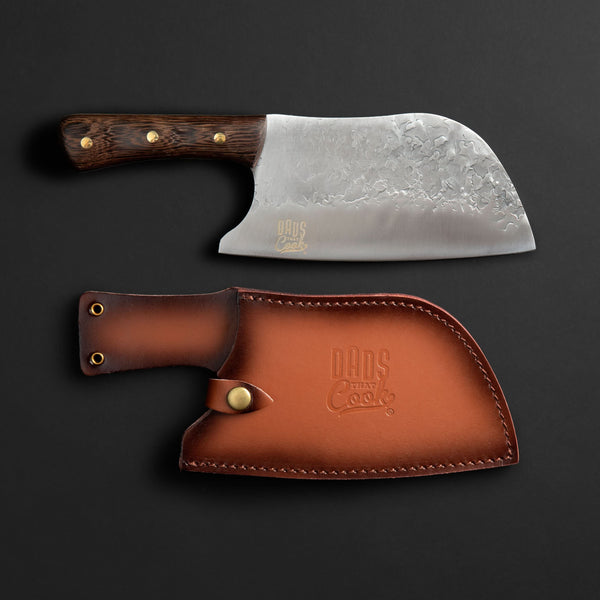
A cleaver should not sit in the knife block waiting for a barbecue showdown. The best cleaver knife uses show up all week long: breaking down chicken, trimming pork ribs, chopping sturdy vegetables, and turning a big family dinner into clean, confident prep. This is the blade you reach for when a light knife feels outmatched.
An 8-inch cleaver brings weight, width, and muscle to the cutting board. Used with control, it can make hard jobs easier without turning your kitchen into a stunt show. The key is knowing what the blade is built to handle, what it is not, and how to put its broad shape to work.
Cleaver Knife Uses That Earn Their Keep
A cleaver is not one single thing. Some are thin Chinese-style vegetable cleavers, meant for fast slicing and scooping. Others are heavy-duty meat cleavers designed to work through joints, cartilage, and small bones. Many home cooks use a versatile, full-tang 8-inch cleaver that sits somewhere between those two worlds: strong enough for serious protein prep, nimble enough for everyday chopping.
That versatility makes it a workhorse for dads who cook big. Whether you are feeding the crew on a Tuesday or firing up the grill for game day, a cleaver gives you more authority over large cuts and tough ingredients.
Break down chicken with less struggle
Whole chickens are one of the smartest buys at the grocery store, but they can feel intimidating if you only own a slim chef knife. A cleaver gives you the weight and spine strength to separate wings, remove the backbone, split a chicken in half, and cut through joints with purpose.
The move is not to slam the blade through bone. Find the joint first. Pull it open, identify the soft spot between bones, then make one controlled cut. For a backbone, use firm downward pressure and rock the blade through rather than hacking wildly. You will get cleaner pieces, less splatter, and a bird ready for the grill, fryer, or roasting pan.
Handle ribs, chops, and hearty barbecue prep
Pork ribs, bone-in chops, and chicken quarters demand a knife that does not flex under pressure. A cleaver can portion racks between the bones, trim through cartilage, and help separate cuts before seasoning. It is a serious asset when you are setting up a rib cookout or building a platter that needs more than prepackaged meat.
For thick cuts, let the blade do the work. Start with a stable cutting board, keep your non-cutting hand well clear, and use a deliberate down-and-forward motion. If you hit a dense bone, stop and reassess. A quality cleaver can handle small, softer bones and joints, but it is not the right tool for large beef femurs or frozen meat. That is where a butcher saw or professional butcher comes in.
Chop dense vegetables without babying the blade
Cleaver knife uses go far beyond meat. That wide, substantial blade is excellent for dense vegetables that make lighter knives feel fragile. Think cabbage for slaw, butternut squash, sweet potatoes, celery root, thick carrots, and piles of onions for chili.
With squash, first create a stable flat surface by trimming one side. Then use the heel of the cleaver near the handle, where the blade has the most power. Press down steadily instead of trying to muscle through with a raised, uncontrolled swing. For cabbage, the broad blade slices cleanly through wedges, then makes quick work of rough chops for tacos, stir-fries, or smoked-brisket sandwiches.
Move food from board to pan
One of the most useful features of a cleaver is the part most people overlook: the blade is wide enough to act like a scoop. After chopping peppers, onions, garlic, or herbs, turn the blade sideways and carry the pile straight to the skillet. It keeps your prep moving and saves you from chasing vegetables across the counter with your hands.
Use the dull spine of the knife against the cutting board whenever possible, especially with a sharp edge. That protects both your fingers and the blade. A cleaver is built to be powerful, but treating it with respect keeps it performing like one.
Crush garlic and ginger for big flavor
The flat side of a cleaver is made for crushing. Place a clove of garlic beneath the broad blade, set your palm flat on the side of the knife, and press firmly. The peel loosens, the garlic opens up, and it is ready for a quick mince. The same move works well for ginger before slicing it into a marinade or sauce.
This is a small task, but it shows why blade shape matters. A narrow knife can do it. A cleaver makes it easy, fast, and controlled.
How to Use a Cleaver Safely
A heavy knife rewards good habits and exposes bad ones. Keep the cutting board stable by placing a damp kitchen towel beneath it. Work on wood or quality plastic, not glass, marble, or a plate. Those hard surfaces can chip an edge and send the knife sliding when you need it most.
Grip the handle firmly, with your thumb and index finger close to the blade for better control. Keep your guide hand in a claw position, curling fingertips inward as the food moves toward the blade. Your eyes should stay on the cutting line, not the conversation happening across the kitchen.
For chopping vegetables, keep the tip near the board and use a steady lift-and-drop rhythm. For joints and cartilage, use one accurate, committed cut after positioning the ingredient correctly. Repeated chopping at the same hard spot is how you damage food, dull an edge, and invite a mistake.
Never try to catch a falling cleaver. Step back and let it fall. It is a basic rule, and it matters every time.
What a Cleaver Should Not Do
The word cleaver makes people think every hard object is fair game. Not true. Avoid cutting frozen food, large dense bones, or anything with an unknown hard center. Those jobs can roll an edge, chip steel, or put stress on the blade that no kitchen knife needs.
A cleaver also is not always the best choice for delicate work. If you are trimming silver skin from a tenderloin, removing skin from fish, or making paper-thin slices, a boning knife or chef knife will usually give you better precision. Strong cooking means choosing the right tool, not forcing one tool to do every job.
It also depends on the cleaver itself. A thin vegetable cleaver should not be used as a bone chopper, while a heavier meat cleaver may be too bulky for fine dicing. Check the blade profile, thickness, and manufacturer guidance before treating any cleaver like a backyard axe.
Keep the Edge Ready for the Next Meal
A sharp cleaver is safer than a dull one because it cuts where you direct it. Wash it by hand after use, dry it immediately, and store it where the edge will not bang into other utensils. Avoid the dishwasher. Heat, harsh detergent, and loose contact with other tools can shorten the life of a good blade.
Use a honing tool regularly to realign the edge, then sharpen when the knife begins crushing tomatoes or slipping through onion skin instead of slicing cleanly. You do not need to sharpen it every week, but you should never wait until prep becomes a fight.
A full-tang cleaver from Dads That Cook is built for the dad chef who wants to prep with confidence, from weeknight chicken tacos to a full backyard spread. Give it a stable board, a sharp edge, and a job worthy of its weight.
The next time you see a whole chicken, a rack of ribs, or a stubborn squash on the counter, do not reach for the smallest knife you own. Set the board, grip the cleaver, and make the cut with purpose. Your family is hungry.