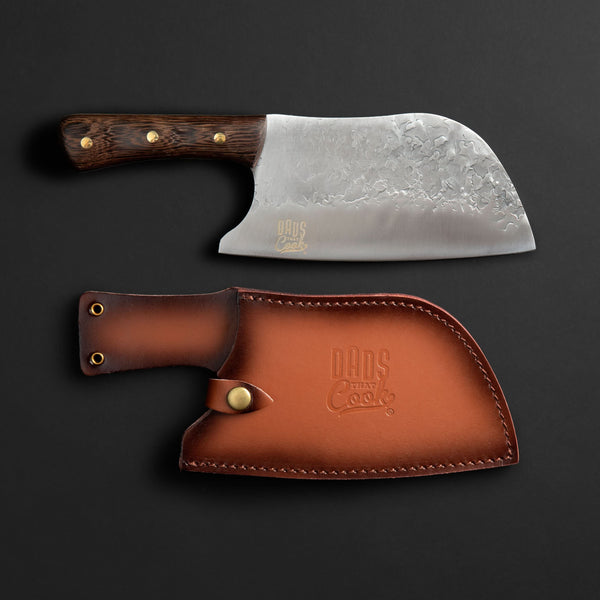
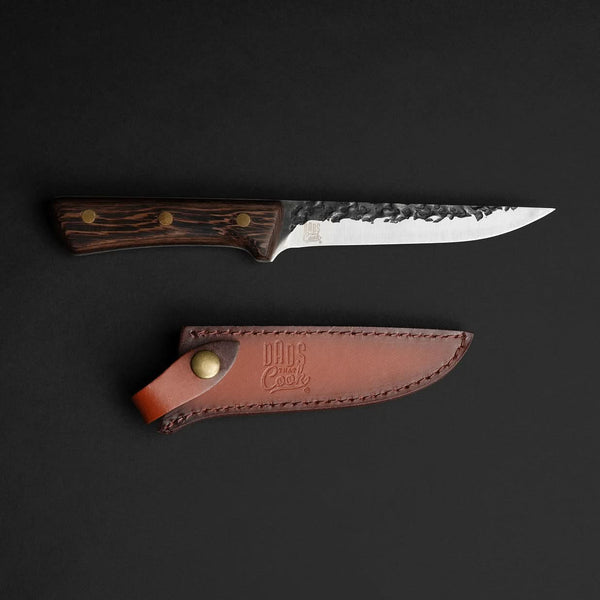
A rack of ribs, a whole chicken, and a big cutting board can make any dad feel like he is ready for battle. Then comes the real question: cleaver versus butcher knife - which blade belongs in your hand? They are both built for serious protein prep, but they do very different work. Pick the right one, and trimming brisket or breaking down chicken feels controlled. Pick the wrong one, and you are fighting the food instead of cooking it.
Cleaver Versus Butcher Knife: The Real Difference
A cleaver is defined by its broad, rectangular blade. It carries more weight forward, gives you a wide cutting surface, and makes a strong visual statement on the board. But a cleaver is not automatically a bone-chopping machine. Many kitchen cleavers, especially thinner Chinese-style models, are all-purpose prep knives made for slicing vegetables, cutting boneless meat, crushing garlic, and moving ingredients from board to pan.
A butcher knife is usually narrower and more curved, with a long blade designed to travel through large cuts of meat. Its shape helps with pulling, slicing, trimming, and separating meat from fat. Traditional butcher knives were workhorses in meat shops, made to process large quantities of beef, pork, and game with speed.
The biggest difference comes down to force versus follow-through. A cleaver lets you use a straight, confident downward cut. A butcher knife favors a longer slicing stroke and more precise work around a roast, primal cut, or large piece of meat.
Neither is automatically better. The right tool depends on whether you are chopping, slicing, trimming, or breaking down.
When a Cleaver Is the Better Call
A cleaver earns its place when your prep needs power, stability, and a lot of blade surface. It is especially useful for home cooks who want one bold knife that can handle everyday kitchen work as well as protein prep.
You want a strong, straight chop
For boneless chicken thighs, pork shoulder chunks, stir-fry beef, cabbage, onions, and herbs, a cleaver gives you a clean vertical path to the cutting board. The blade stays flat and steady rather than rocking through the cut like a chef knife. That can make repetitive prep feel faster and more controlled.
The wide blade also works like a built-in bench scraper. Slice a pile of peppers, scoop them up, and send them straight to the skillet. When the grill is hot and the family is hungry, small advantages matter.
You prep more than just meat
A versatile cleaver is a serious everyday blade, not a specialty tool that comes out twice a year. Its tall profile gives your knuckles clearance when you are chopping, and the flat side can smash garlic or ginger in one firm press.
For the dad who cooks weeknight tacos, weekend wings, and Sunday breakfast, an 8-inch cleaver can cover a lot of ground. A full-tang cleaver with a balanced handle gives that broad blade the confidence to work hard without feeling like a clumsy slab of steel.
You need to portion small bones carefully
A heavier meat cleaver can cut through smaller, softer bones such as poultry joints and some rib sections. But this is where the details matter. A thin, finely sharpened kitchen cleaver is not meant to hammer through dense beef bones or frozen food. That is how chipped edges happen.
Use the heel of a purpose-built heavy cleaver for suitable bone work. For joints, find the natural gap first. Let sharpness and placement do the work instead of trying to overpower the cut.
When a Butcher Knife Pulls Ahead
A butcher knife shines when the job is long, lean, and meat-focused. It is the blade you reach for when a big cut needs to become clean steaks, neat portions, or a trimmed roast ready for smoke.
You are trimming a large cut of meat
Brisket, tri-tip, pork loin, whole tenderloin, and large roasts all benefit from the butcher knife's longer, narrower profile. It can glide under a layer of fat or silver skin without removing more good meat than necessary.
A cleaver can trim fat, but its tall blade may feel less nimble when you are working close to the meat. If you have ever tried to shape a brisket with a broad blade, you know the difference. A butcher knife gives you a clearer view of the cut and more room to make shallow, deliberate passes.
You slice large portions
After the smoker has done its job, presentation starts with the first slice. A butcher knife's long blade helps create smooth, even cuts through brisket, smoked turkey breast, ham, and large steaks. You can use a single draw stroke instead of sawing back and forth, which protects the crust and keeps juices where they belong.
For carving cooked barbecue, a dedicated slicing knife is often even better. Still, a butcher knife is more capable than a cleaver when the task includes both final trimming and slicing a large protein.
You process game or bigger cuts
If you hunt, buy primal cuts in bulk, or regularly portion large roasts, a butcher knife makes sense. Its working length and pointed tip are useful for separating muscles, opening seams, and getting clean access around connective tissue.
That does not replace a boning knife. A flexible 6-inch boning knife remains the better choice for detailed work around ribs, joints, and bones. Think of the butcher knife as the middle ground between a general kitchen blade and a precision boning blade.
Blade Shape Changes How You Cook
The blade's shape affects more than looks. It changes your hand position, your cutting motion, and the amount of control you have when the board gets crowded.
A cleaver's height gives you a stable wall of steel beneath your knuckles. Its flat edge favors push cuts and straight chops. The weight can help it move through firm ingredients, but that same weight demands respect. Keep your fingers tucked, use a stable cutting board, and do not rush a heavy blade.
A butcher knife is typically more agile at the tip and more comfortable for long slicing strokes. The curve gives it a natural flow through meat, though it is less useful for scooping chopped ingredients and less satisfying for rapid vegetable prep.
Handle construction matters just as much as blade shape. Look for a secure grip, a blade that feels balanced in your hand, and full-tang construction that carries steel through the handle. A knife should feel like an extension of your arm, not a tool you have to wrestle into position.
Do Not Confuse a Cleaver With a Meat Axe
The word “cleaver” gets used loosely. That creates expensive mistakes.
A thin all-purpose cleaver is made to slice and chop. It can handle boneless proteins beautifully and may work through poultry joints when used correctly. A thick, heavy butcher's cleaver is designed for tougher chopping work, but even it has limits. Dense bones, frozen meat, and hard surfaces are hard on any kitchen edge.
Never use your knife on glass, marble, ceramic, or a flimsy plate. Use a solid wood or quality plastic cutting board. Keep the blade sharp. A dull knife needs more force, slips more easily, and turns a simple cut into a sketchy one.
After heavy prep, wash and dry the knife by hand. Do not leave a sharp blade buried in a sink full of cloudy water. That is bad for the edge and worse for whoever reaches in next.
Which Knife Should You Buy First?
For most home cooks, a versatile cleaver is the more exciting first choice. It handles vegetables, boneless meat, garlic, herbs, and fast dinner prep with authority. It brings enough size and presence to feel right at home beside a grill, smoker, or cast-iron skillet.
Choose a butcher knife first if your cooking revolves around large cuts of meat. Maybe you trim briskets before every cookout, process venison, buy whole pork loins, or take pride in serving perfectly sliced roast beef. In that case, its specialized shape will earn its keep quickly.
The strongest setup is not about owning the most knives. It is about building a crew where every blade has a job. A capable chef knife or cleaver for daily prep, a boning knife for close protein work, and a longer meat knife for trimming and slicing cover nearly every serious home-cooking mission. Dads That Cook gear is built around that kind of practical confidence: sharp tools, clean cuts, more time feeding your people.
Before your next cookout, look at what is actually on the cutting board. If you are chopping piles of ingredients and portioning boneless proteins, grab the cleaver. If you are trimming a brisket down to its best shape or carving a roast for the table, reach for the butcher knife. Respect the blade, keep it sharp, and let the meal speak for itself.