A great steak deserves more than a dull blade sawing back and forth across the plate. The best knives for cutting meat make every stage of the job cleaner - trimming a tri-tip, breaking down chicken, carving a roast, or serving ribeyes hot off the grill. The right blade gives you control, protects the texture of the meat, and makes you look like the guy who knows exactly what he’s doing.
There is no single knife that owns every protein job. That is good news. You do not need a drawer full of specialty blades to cook with confidence. You need a capable core lineup, sharp edges, and the know-how to grab the right tool when dinner is on the line.
The Best Knives for Cutting Meat Start With the Job
Think of meat prep in three moments: cutting raw proteins into shape, separating meat from bone or fat, and slicing cooked meat for the table. Each moment rewards a different blade profile.
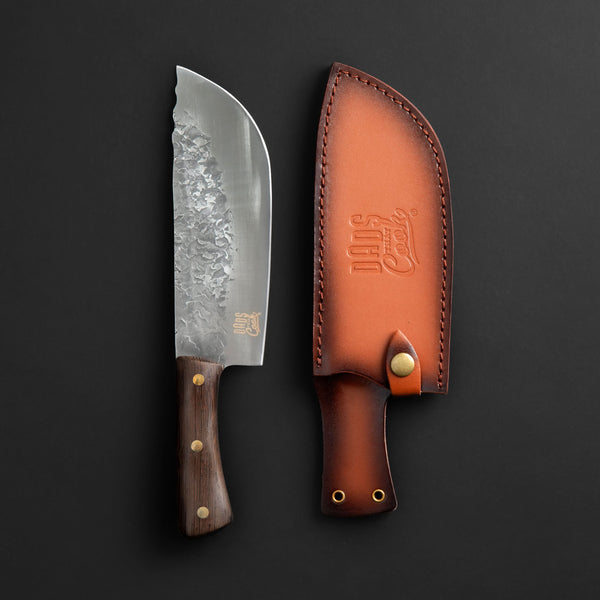
A broad chef knife is the everyday workhorse. A cleaver brings authority to bigger cuts and heavier prep. A boning knife handles close, detailed work around joints and bones. A steak knife finishes the job when it is time to eat. Build around those four roles and you can handle just about any weeknight dinner, holiday roast, or backyard barbecue.
The goal is not to use the biggest knife possible. It is to use a sharp, balanced knife that lets you make deliberate cuts without fighting the food. When you force a blade, the meat tears, your hand gets tired, and precision disappears fast.
Your Core Meat-Cutting Knife Lineup
The chef knife: your everyday protein machine
A 7.5- to 8-inch chef knife is the best first knife for cutting boneless meat at home. It has enough length to slice chicken breasts, portion pork loin, cube beef for kebabs, and trim a tenderloin without feeling unwieldy on a standard cutting board.
Its curved edge also supports a smooth rocking motion. That matters when you are cutting multiple servings or working through a pile of vegetables alongside your protein. Use it for boneless cuts and general prep, not for hacking through thick bone. A chef knife is built to slice with control, not absorb blunt-force punishment.
Look for full-tang construction, where the steel runs through the handle. That design generally provides better balance and a more solid feel in the hand. When your knife feels planted rather than flimsy, you can guide it with more confidence.
The cleaver: big cuts, serious momentum
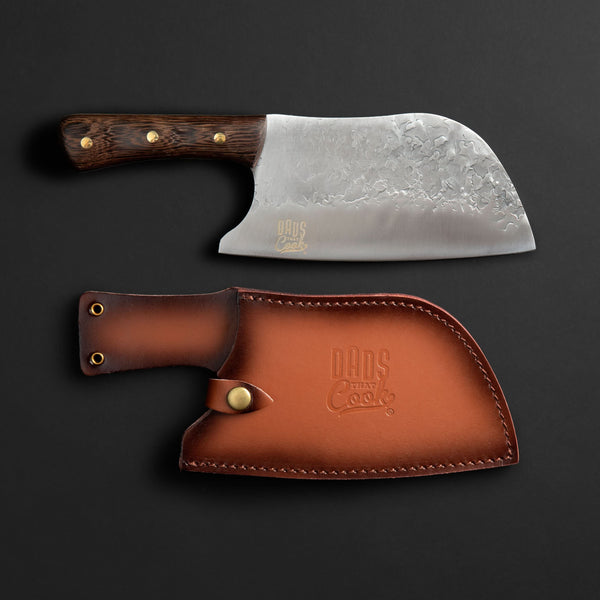
An 8-inch cleaver earns its space when the prep gets bigger. It is a strong choice for sectioning racks, cutting through small poultry bones, portioning large slabs of pork, and moving chopped meat from board to pan. The broad blade is also useful as a scoop, which keeps your station moving when the grill is hot and the family is hungry.
Not every cleaver is meant for hard bones. A thin Chinese-style vegetable cleaver, for example, is a slicing tool and should not be used like a hatchet. A heavier meat cleaver is built for more force, but even then, technique matters. Use a controlled downward chop on a stable board. Never twist the blade once it contacts bone.
For brisket, smoked turkey, prime rib, and other cooked barbecue, a cleaver can make impressive, clean slices if it has a sharp edge and enough length. But a long slicing knife may be better if you regularly carve very large roasts. It comes down to how you cook most often.
The boning knife: precision around bone, fat, and skin
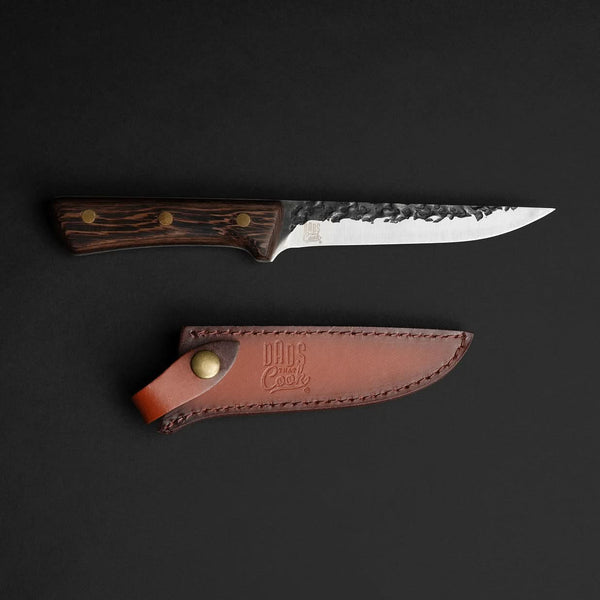
A 6-inch boning knife is the quiet hero of meat prep. Its narrow, pointed blade reaches into the tight spots a chef knife cannot. Use it to remove silver skin from a pork tenderloin, trim fat from a brisket, separate chicken thighs from the backbone, or fillet meat away from ribs.
A flexible boning knife follows the contour of fish and delicate poultry well. A stiffer version gives you more authority on beef, pork, and heavier trimming. For most home cooks who handle a mix of proteins, a moderately flexible boning knife is a smart middle ground.
The key is to let the blade do the work. Keep the knife close to the bone, use short strokes, and turn the meat rather than making your wrist work at a strange angle. Those small moves save meat that would otherwise end up in the discard pile.
Steak knives: the final cut counts
The best steak knife is sharp enough to glide through a rested steak without crushing it. That might sound like a small detail, but a ragged cut lets flavorful juices spill onto the plate instead of staying in the bite.
Straight-edged steak knives are easier to sharpen and create clean slices. Serrated steak knives stay useful longer between sharpenings, but they can tear softer meat and are harder to restore once dull. If you value a precise, restaurant-style cut, choose a quality straight edge and keep it maintained.
A good steak knife should feel comfortable in the hand and carry enough weight to feel substantial without becoming clumsy. Family dinner deserves better than disposable blades that shred a beautiful medium-rare ribeye.
What Makes a Meat Knife Worth Buying?
Sharpness gets the headlines, but it is only part of the story. A knife must also hold an edge, feel balanced, and give you a secure grip when your hands are wet or greasy.
Stainless steel is a practical choice for home cooks because it resists corrosion and handles frequent use. Different steels vary in hardness and edge retention, but the best option is not automatically the hardest one. Extremely hard steel can hold an edge for a long time, yet it may be more difficult to sharpen. A dependable stainless blade that you can maintain easily is a better partner than a fancy knife left dull in a drawer.
Handle shape matters too. A handle should fill your hand without forcing you into a death grip. If you are doing ten minutes of chicken prep, almost any handle can feel fine. If you are trimming brisket, slicing vegetables, and carving meat for a crowd, poor ergonomics show up fast.
At Dads That Cook, a full-tang chef knife, cleaver, boning knife, and steak knife set covers the jobs most dads actually tackle. That is the point of a useful lineup: less guessing, more cooking.
Match the Knife to the Meat
For raw chicken, start with a chef knife for boneless breasts and a boning knife for joints, skin, and backbone work. Keep a separate cutting board for raw poultry, wash the board and knife thoroughly, and never let a dull blade turn fast prep into a slippery fight.
For beef, the chef knife handles steaks, cubes, and roasts, while the boning knife shines when trimming a whole tenderloin or removing silver skin. A cleaver can tackle heavier sectioning, but use it only when the blade and the task match.
For pork, use the chef knife to portion chops or slice loin, then switch to the boning knife around ribs and shoulder bones. When trimming a pork butt for the smoker, work slowly. Take off only the hard fat and loose pieces. Leave enough fat to protect the meat during a long cook.
For cooked barbecue, let the meat rest before slicing. Then use a long, sharp blade and cut across the grain. Brisket, flank steak, tri-tip, and skirt steak all become more tender when sliced against the muscle fibers. The sharpest knife in the world cannot rescue a cut made with the grain.
Keep Your Edge Ready for Battle
A sharp knife is safer because it bites where you place it. A dull knife skates, slips, and makes you press harder than you should. That extra force is where many kitchen mistakes begin.
Hone your knife regularly to realign the edge, especially before a big cooking session. Honing does not remove much metal or truly sharpen a worn blade. When the knife no longer cuts cleanly through a tomato or catches on paper instead of slicing it, use a sharpener or have it professionally sharpened.
Hand-wash your knives, dry them right away, and store them where edges do not bang into other utensils. The dishwasher is rough on blades and handles. Tossing knives loose into a drawer is worse. A knife block, magnetic strip, or blade guards will help protect the edge you paid for.
One Clean Cut Changes the Whole Meal
The best meat knife is the one that feels steady in your hand and earns its place every time you cook. Start with a sharp chef knife, add a boning knife for precision, bring in a cleaver for bigger jobs, and serve the final result with steak knives that respect the food.
Then put them to work. Trim the brisket with purpose. Slice the roast against the grain. Set down plates your people remember. Sear. Slice. Repeat.