A whole chicken on the cutting board. A side of salmon waiting for the grill. A rack of ribs that deserves better than hacked-up bones and wasted meat. The boning knife versus fillet knife question gets real fast when you are the one feeding the family. Both blades are narrow, sharp, and built for precision, but they do different jobs. Pick the right one and prep gets cleaner, faster, and a whole lot more satisfying.
Boning Knife Versus Fillet Knife: The Fast Answer
Choose a boning knife when you are working around bones, joints, cartilage, and connective tissue. Choose a fillet knife when you are separating delicate fish flesh from skin and bones. A boning knife is generally sturdier and less flexible. A fillet knife is usually thinner, longer, and built to flex.
That is the simple answer. The practical answer is that plenty of home cooks can get through a fish dinner with a boning knife or trim a tenderloin with a fillet knife. The difference shows up in the quality of the cut, the control in your hand, and how much meat you leave behind.
If your cooking leans toward steaks, whole birds, pork shoulders, roasts, and barbecue, a boning knife earns its spot first. If you catch fish, buy whole fish, or serve salmon and trout often, add a fillet knife to the lineup.
What a Boning Knife Is Built to Do
A boning knife is a close-quarters blade. It typically runs about 5 to 7 inches long, with a narrow pointed tip that can slip into tight spaces. The blade may have a gentle curve, which helps it follow the contours of a bone without forcing you to make clumsy, choppy cuts.
Its real strength is controlled separation. You use it to free meat from bones, find joints in a chicken, remove silver skin from pork tenderloin, trim fat from a brisket, or clean up a rack of lamb. The blade needs enough stiffness to push through connective tissue and enough agility to turn around a joint.
A flexible boning knife works well for poultry and some fish. A stiffer version is better for larger cuts of beef, pork, and venison. Neither should be used like a cleaver. Do not twist it against bone or try to chop through joints. Let the tip locate the seam, then use smooth strokes to do the work.
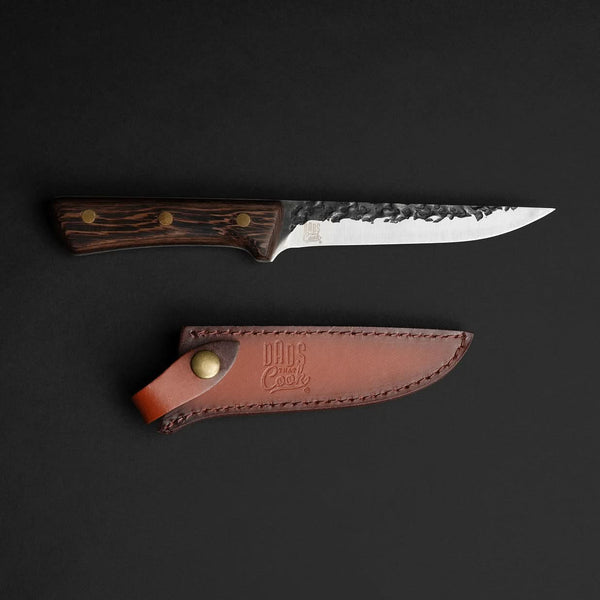
For a dad chef who likes to buy big cuts and break them down himself, this is one of the highest-value knives in the kitchen. A capable 6-inch boning knife, like the one from Dads That Cook, gives you the reach to trim a roast while staying nimble enough for a whole chicken.
Where the boning knife shines
Picture trimming a tri-tip before the smoker goes on. You want to remove thick surface fat and silver skin without carving away the good stuff. A chef knife can handle the broad cuts, but its wider blade fights you when the work gets close. A boning knife rides just under the membrane and keeps the blade where it belongs.
The same goes for chicken. The knife tip finds the thigh joint, follows the backbone, and separates breast meat from the carcass with far less waste. Save those bones for stock and you have turned one bird into several meals. That is how you cook with purpose.
What a Fillet Knife Is Built to Do
A fillet knife is designed to bend. Its blade is usually 6 to 9 inches long, thin from spine to edge, and notably flexible. That flex lets it hug the rib cage of a fish and glide between flesh and skin with minimal pressure.
Fish is tender and layered. Push too hard and the flesh tears. Use a blade that is too thick and you leave valuable meat attached to the bones. A fillet knife solves both problems by making long, shallow cuts while its blade follows the fish's natural shape.
It is the right tool for removing pin bones, skinning salmon, portioning a large fillet, and turning a whole trout, snapper, or walleye into clean pieces ready for the pan or grill. The narrow blade also produces attractive, even portions when presentation matters.
A fillet knife can help with delicate jobs beyond seafood, such as trimming skin from chicken or slicing thin pieces of raw meat for stir-fry. Still, its flexibility is a limitation when you hit tough sinew or dense connective tissue. That same bend that makes fish prep smooth can make heavy trimming feel sloppy.
Where the fillet knife shines
Take a salmon fillet with the skin on. Set the blade almost flat against the skin, hold the tail end firmly, and make a short starting cut. Then use a gentle sawing motion while keeping the blade angled slightly downward. The fillet knife flexes against the skin and preserves the fish.
Try that with a thick, stiff knife and you may cut through the skin, gouge the flesh, or leave a layer of salmon behind. Great tools create better odds. Skill finishes the job.
Blade Flex Is the Difference You Feel
When comparing a boning knife versus fillet knife, blade flex is the biggest factor. It affects every movement you make.
A boning knife gives resistance. That lets you make deliberate cuts around a beef bone or through the tough seam between a chicken leg and body. You can apply more pressure without the blade wandering. It feels planted, which builds confidence when the cut is dense or irregular.
A fillet knife gives way. It conforms to a fish's ribs and skin, reducing the need to constantly reposition your wrist. That flexibility makes it precise on delicate proteins, but it demands a lighter hand. If you bear down, the blade can bend away from your intended line.
There is no universal winner. Stiffness wins when control means standing up to tougher anatomy. Flex wins when control means following a fine surface without tearing it apart.
Can One Knife Do Both Jobs?
Yes, within reason. If you only cook fish a few times a year and mostly prepare chicken, steaks, roasts, and barbecue, buy the boning knife first. Choose a moderately flexible model and it can handle occasional fish fillets well enough.
If seafood is a weekly move in your kitchen, get both. You do not need a drawer full of specialty blades to cook like a pro, but the right two precision knives cover a lot of ground. One handles meat and poultry breakdown. The other makes fish prep clean and efficient.
Using a fillet knife to bone a chicken is possible, but it is not ideal. The narrow blade can feel too whippy when you work around joints. Using a boning knife to skin fish is also possible, but a stiff blade is more likely to leave meat on the skin. You are not doing it wrong. You are just making the job harder than it needs to be.
How to Choose the Right Blade for Your Kitchen
Start with what hits your cutting board most often. A backyard smoker who trims brisket, separates ribs, and breaks down poultry needs a boning knife. An angler who comes home with fresh catch needs a fillet knife. A family cook who does both should consider which task matters most now, then add the second blade when the menu demands it.
Pay attention to handle security and balance, not just blade length. Wet hands, fish oils, poultry juices, and fat can make a slick handle dangerous. A full-tang knife with a comfortable grip gives your hand more control during detailed work. Keep the blade sharp, too. A dull precision knife forces pressure, and pressure is where cuts go sideways.
Hand-wash and dry either knife after use. Store it where the edge cannot bang into other tools. For honing, use light passes and respect the blade's thin edge, especially with a flexible fillet knife. Sharpen before the knife becomes frustrating, not after it has started shredding food.
The best blade is the one that turns prep from a chore into a move you are proud to make. Trim the roast clean. Break down the bird. Skin the salmon without wasting an ounce. Put better food on the table, then enjoy the moment when everybody comes back for seconds.