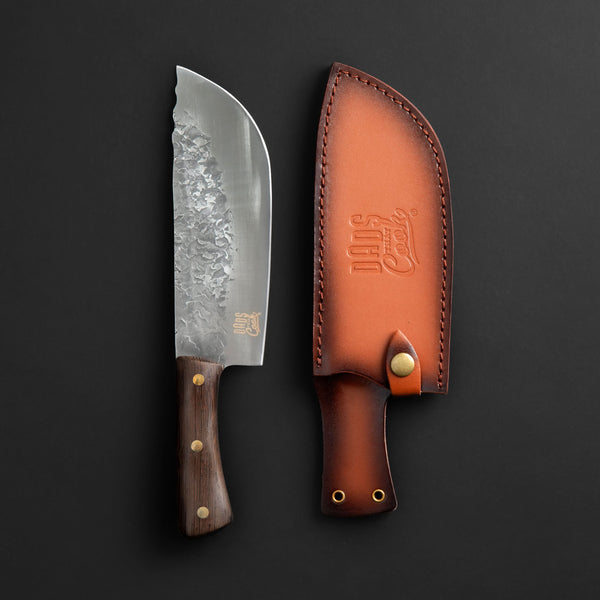
The right blade changes the whole feel of dinner prep. This home cook knife guide is not about filling a drawer with gadgets or buying a knife for every vegetable. It is about building control at the cutting board, moving through prep with confidence, and putting better food in front of your people.
A sharp, balanced knife helps you slice a tomato without crushing it, break down chicken without fighting joints, and carve a rested steak into clean, worthy portions. That is the difference between just getting dinner done and running the kitchen like you mean it.
Start With the Knives You Will Actually Use
Most home cooks do not need a 15-piece knife block. They need a small, capable lineup that covers everyday prep, protein work, and the meals that bring everyone to the table.
The chef knife: your everyday workhorse
A 7- to 8-inch chef knife earns its spot first. It handles onions, peppers, herbs, potatoes, fruit, boneless meats, and most of the chopping that happens before the pan gets hot. Its curved edge supports a rocking motion for mincing, while the length gives you enough blade to make long, clean slices.
For many dads, this is the knife that stays on the board from the first clove of garlic to the last garnish. Look for a blade that feels balanced rather than front-heavy, with enough knuckle clearance to keep your hand off the cutting board. Full-tang construction matters here because the steel runs through the handle, creating a stronger tool with steadier control.
The cleaver: bring muscle to big jobs
An 8-inch cleaver is not just for dramatic chopping. It shines when you are working through large vegetables, thick cuts of meat, ribs, or a mountain of prep for a cookout. The broad blade can also scoop chopped ingredients straight from board to skillet.
A cleaver asks for judgment. It is built for force, but force is not a substitute for technique. Do not swing wildly at hard bones or frozen food. Set the ingredient securely, use deliberate downward cuts, and let the weight of the blade do the work. For chicken joints, find the joint before cutting rather than trying to power through bone.
The boning knife: precision around meat and fish
A 6-inch boning knife is the specialist that becomes essential once you start trimming brisket, separating chicken thighs, removing silver skin, or filleting fish. Its narrow, pointed blade works close to bones and follows the shape of the protein with less waste.
This is where a sharp edge pays off in dollars as well as flavor. Better trimming means more usable meat, cleaner portions, and less hacking at an expensive roast. Keep the blade angle low and use short strokes. You are guiding the knife along bone or connective tissue, not digging into the meat.
Steak knives: the final handoff
You can cook a beautiful steak, rest it properly, and nail the temperature, then ruin the first bite with a dull table knife. A good steak knife protects the crust, cuts cleanly through the center, and lets guests enjoy the meal you worked for.
Use them for steak, chops, grilled chicken, and any protein that deserves a clean cut at the plate. They are a small detail, but the table notices details.
Choose Feel and Construction Over Fancy Claims
Steel names and hardness numbers can be useful, but they do not tell the whole story. A home cook needs a knife that feels secure in hand, stays sharp through real use, and can be maintained without turning knife care into a second hobby.
Start with the handle. It should feel planted when your hand is dry and when it is slightly damp. A handle that is too small forces you to grip harder. One that is too bulky makes fine work clumsy. The right fit lets you hold the knife firmly without white-knuckling it.
Then check the balance point. Pinch the blade just in front of the handle between thumb and forefinger. A well-balanced knife will feel controlled, not like the blade is dragging your wrist down or the handle is fighting the cut. There is no single perfect balance. A heavier cleaver can be useful for substantial prep, while a chef knife should feel quick enough for repeated chopping.
Finally, respect the edge. Stainless steel is practical for busy kitchens because it resists corrosion, but no knife stays sharp forever. The best knife is the one you will use, clean, store, and sharpen consistently.
Use Your Knife Like a Cook, Not a Daredevil
Good knife skills are not flashy. They are repeatable. Start with a stable cutting board on a dry counter. If the board slides, place a damp kitchen towel underneath it. A moving board turns a routine slice into a bad decision fast.
Use a pinch grip on larger knives: pinch the blade near the handle with your thumb and index finger, then wrap your remaining fingers around the handle. Your other hand should form a claw, with fingertips tucked behind curled knuckles. Let the flat side of the blade ride against those knuckles as you cut.
Keep the knife moving forward and down, or back and down, instead of pushing straight through food. That slicing motion is cleaner and safer. It also preserves delicate ingredients. A ripe tomato needs a sharp, drawn cut. An onion benefits from deliberate, even strokes. A steak needs long slices across the grain, not a sawing battle.
A few habits separate confident cooks from frustrated ones:
- Never try to catch a falling knife. Step back and let it fall.
- Never use a knife to pry open packages, twist apart frozen food, or scrape hard residue from a pan.
- Keep your attention on the board. Save the big story for after the blade is down.
- Move chopped food with the spine of the knife or a bench scraper, not the sharpened edge.
Sharp Is Safer, but Sharpening and Honing Are Different
A dull knife needs more pressure. More pressure means less control, especially when you are slicing slick onions, tomato skins, or raw protein. A sharp knife bites where you place it.
Honing does not truly sharpen a blade. A honing rod realigns an edge that has rolled slightly during use. If your knife feels a little less crisp but is not visibly damaged, a few careful passes on a honing rod may bring it back into line. Keep the motion slow, maintain a consistent angle, and avoid the fast television-chef routine.
Sharpening removes a small amount of steel to create a new edge. Use a quality sharpener or a whetstone when honing no longer restores clean cuts. How often depends on how much you cook, what you cut, and how you store the knife. For an active home kitchen, checking the edge every few weeks is smart. If the blade tears herb leaves, slides off tomato skin, or crushes onions before cutting them, it is time for attention.
Do not wait until a knife is useless. Regular light maintenance is easier on the blade than letting it get painfully dull and then grinding away a lot of steel to fix it.
Care for the Blades That Carry Dinner
Hand-wash quality knives with warm water, mild soap, and a soft sponge. Dry them immediately. The dishwasher is rough on edges, handles, and finish, and loose knives can damage other items or get damaged themselves. A good knife deserves better than rattling around in a hot metal box.
Store knives so the edges are protected. A knife block, magnetic strip, blade guards, or an organized drawer insert can all work. The wrong storage is tossing blades into a drawer where they knock together and wait to surprise someone reaching for a spoon.
Your cutting surface matters too. Wood and quality plastic boards are kinder to an edge than glass, marble, ceramic, or stone. Hard surfaces may look clean and polished, but they punish knives. Save them for serving, not chopping.
For the dad building a serious setup, a full-tang chef knife, cleaver, boning knife, steak knives, a stable cutting board, and a dependable sharpener cover a lot of ground. Dads That Cook builds around that real-world lineup because capable tools should get used, not just displayed.
Let the Meal Set the Standard
The best knife choice depends on what you cook. If weeknights mean tacos, stir-fries, and sheet-pan dinners, put your energy into a great chef knife and keep it sharp. If you own the smoker and buy larger cuts, add the boning knife and cleaver. If Sunday dinner means a carved roast or grilled ribeyes, do not overlook proper steak knives.
Do not chase a perfect collection. Build the one that makes you more willing to cook. Put a sharp blade in your hand, give yourself a solid board, and make the next family meal with the kind of care people can taste.