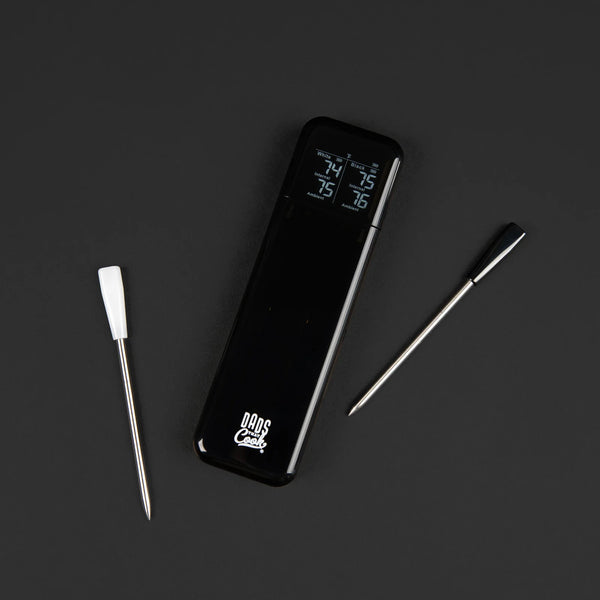
A steak can look perfect on the outside and still disappoint at the table. A brisket can bark up beautifully, then turn dry because it stayed on the heat 20 minutes too long. That is why the wireless versus probe thermometers debate matters. The right thermometer does more than flash a number. It gives you control when the grill is hot, the kitchen is busy, and hungry people are waiting.
For most dad chefs, this is not really a battle between one good tool and one bad tool. Wireless and traditional probe thermometers solve different problems. One helps you move fast at the grill. The other lets you monitor a long cook without hovering over the smoker like it owes you money. Know the difference, and you can cook meat with more confidence every single time.
Wireless Versus Probe Thermometers: The Real Difference
First, clear up the language. Almost every food thermometer has a probe - the metal tip that measures temperature. When people compare wireless versus probe thermometers, they usually mean a wireless leave-in thermometer versus a handheld instant-read probe thermometer.
A handheld probe thermometer is built for quick spot checks. You insert the tip into the thickest part of a burger, chicken breast, pork chop, or steak, wait a few seconds, and get your answer. Then you pull it out. It is the right tool when you are actively cooking and need to make a move now: flip, pull, rest, or keep going.
A wireless thermometer stays in the food during the cook. It sends temperature data to a receiver, charging block, or phone app. Some models use a wired probe connected to a transmitter outside the grill. Others use a fully wireless probe placed directly in the meat. Either way, the advantage is distance. You can check the internal temperature while handling sides, talking with guests, or keeping an eye on the kids in the backyard.
The simple rule: instant-read probes are for decisions in the moment. Wireless thermometers are for managing time.
When a Handheld Probe Thermometer Wins
A quality instant-read thermometer earns its place in nearly every kitchen. It is fast, direct, and useful across far more meals than barbecue. If you are pan-searing salmon on Tuesday, roasting chicken on Thursday, and grilling burgers on Saturday, a handheld probe gets used constantly.
Speed is its biggest strength. A fast-reading probe lets you check several pieces of food in seconds. That matters when cooking chicken thighs, steaks with different preferred doneness levels, or a mixed grill loaded with sausages, chops, and vegetables. You do not need to set up an app, pair a device, charge a transmitter, or worry whether Bluetooth reaches through the patio door. Grab it. Check it. Cook with purpose.
Handheld probes also make it easier to test the right place. With a steak, you can angle the tip into the center from the side. With a thick chicken breast, you can avoid touching the pan or grill grate. With a roast, you can test more than one area to make sure there is not a cool pocket near the bone.
This is especially useful for thinner foods. Wireless probes can be too large for fish fillets, thin pork chops, skewers, wings, or burgers. For these jobs, a slim instant-read probe is the cleaner, more practical choice.
A digital instant-read thermometer, like the one Dads That Cook puts in the hands of serious home cooks, also keeps the process simple for newer grillers. You learn what properly cooked food feels like, looks like, and measures like. That is how confidence gets built - one accurate check at a time.
The trade-off: You have to be present
A handheld probe cannot watch the cook for you. If you are smoking a pork shoulder for nine hours, checking it every few minutes means opening the lid, losing heat, and spending half the day tied to the patio. It is still valuable at the finish line, but it is not the best solo tool for a marathon cook.
When a Wireless Thermometer Takes Control
Wireless thermometers shine when the cook takes time. Think whole turkeys, prime rib, brisket, pork butt, ribs, reverse-seared tomahawks, and thick bone-in chicken. These are the cooks where internal temperature changes gradually, and knowing the trend matters as much as knowing the number.
Set a wireless probe in the thickest part of the meat before it goes on the grill or into the oven. Then set alerts for target temperatures. Instead of repeatedly lifting the smoker lid, you can see whether the meat is climbing steadily, stalling, or approaching the pull temperature.
That freedom is a real advantage when you are cooking for people. You can prep the salad, slice onions with a sharp full-tang knife, set the table, or actually enjoy the game. The grill is still working. You are still in command.
Many wireless units also monitor ambient temperature near the meat. That can reveal whether your grill is running hotter or cooler than the lid gauge claims. On a long smoke, this information helps you make smarter vent, fuel, or burner adjustments before the cook gets away from you.
The trade-off: More technology means more variables
Wireless tools are not magic. They need battery life, connectivity, and proper placement. Bluetooth range can shrink when walls, metal grills, or a busy backyard get in the way. App alerts can be missed if your phone is on silent. Fully wireless probes need charging and may be thicker than a standard instant-read probe.
They also cost more. If you mostly cook weeknight meals, burgers, steaks, and chicken breasts, a wireless system may spend more time in a drawer than on the grill. Buy the tool that matches how you actually cook, not the gadget that looks toughest in a product photo.
Accuracy Is About Technique, Not Just the Tool
The best thermometer still needs a smart cook behind it. Whether you choose a wireless unit or a handheld probe, placement determines whether the reading means anything.
Insert the probe into the thickest portion of the meat. Stay away from bone, since bone can conduct heat and give a misleading reading. Avoid large pockets of fat. With roasts and poultry, aim for the center of the muscle. With steaks, insert from the side so the sensing area reaches the middle rather than just the hot outer layers.
Also remember that carryover cooking is real. Large cuts continue rising in temperature after they leave the heat. A thick steak, roast, or turkey should usually come off before it reaches the final temperature you want. Resting is not dead time. It is when juices redistribute and the meat finishes the job.
For food safety, use reliable targets. Poultry should reach 165°F in the thickest part. Ground meats need careful attention because bacteria can be mixed throughout, not just on the surface. Whole cuts of beef, pork, lamb, and fish offer more room for preference, but accurate readings still beat guesswork every time.
Which Thermometer Should You Buy First?
If you are buying one thermometer for everyday cooking, start with a fast, dependable instant-read probe. It is the workhorse. It helps with steaks, chicken, burgers, roasts, oil for frying, bread, leftovers, and just about any meal where temperature decides the outcome.
Choose a wireless thermometer first if long barbecue cooks are your main event. If you regularly smoke brisket through the afternoon, roast holiday turkeys, or run a reverse sear while hosting the neighborhood, remote monitoring pays off. It reduces lid lifting, frees up your time, and helps you catch the finish before an expensive cut goes past its prime.
For the dad who wants to dominate both the weeknight kitchen and the weekend grill, owning both makes sense. Use the wireless thermometer to track the long cook. Use the instant-read probe to verify the final temperature, check different areas, and test smaller items cooking alongside it. That is not overkill. That is a prepared cook using the right gear.
Make Temperature Your Advantage
Great cooking does not require fancy chef tricks. It requires paying attention when it counts. A wireless thermometer gives you room to host, prep, and enjoy the day while the big cut cooks. A handheld probe gives you quick truth when the steak is sizzling and the family is ready to eat.
Pick the tool that fits the meal in front of you, keep it clean and ready, and trust the temperature over the clock. Sear. Check. Rest. Serve something worth gathering around.