A steak can look perfect from across the grill and still be gray in the middle. A chicken thigh can look done while the bone-side meat needs more time. That is why a probe thermometer review should focus on the one thing that matters most: whether the tool helps you serve food at its best, without guessing.
For dads who take pride in feeding the crew, a thermometer is not a fussy extra. It is a control tool. It tells you when to pull the rib roast, when the pork is ready to rest, and when those burgers are safe to hit the buns. Sear. Slice. Repeat.
Probe Thermometer Review: What Matters at the Grill
Not every thermometer earns a spot next to your knives and tongs. The best choice depends on how you cook, but a capable probe thermometer should deliver a quick, trustworthy reading, hold up to regular use, and stay simple when the grill is hot and everyone is hungry.
Speed keeps you in command
An instant-read probe thermometer should settle on a reading fast enough that you can check a steak without leaving the lid open forever. A slow thermometer turns a quick check into a heat leak. It also encourages bad habits, like holding the probe in one place too long or checking only once because the process is annoying.
For everyday grilling, speed means confidence. Check the center of a chicken breast, move to the thickest part of the thigh, then verify the burgers in seconds. You are making decisions while the food is still in your hands, not standing around waiting for a number to stop wandering.
Fast does not mean reckless. A thermometer that flashes a number instantly but settles several degrees higher or lower is no help. Look for a reading that stabilizes quickly and repeats when you check the same spot again.
Accuracy beats grill-side guesswork
A few degrees can be the difference between a juicy medium-rare steak and a disappointed silence around the table. Accuracy matters most when cooking lean meats, expensive cuts, and poultry. It also matters when you are trying to nail the same result every time instead of hoping you get lucky.
No home thermometer needs laboratory-level precision to make great food. But it should read consistently, and it should give you a result you can trust. If you test it in ice water or boiling water, remember that elevation changes the boiling point. That is not the thermometer failing. That is science showing up in your kitchen.
Probe placement matters just as much as the device. Slide the tip into the thickest part of the meat. Avoid bone, which can read hotter than the surrounding meat. Do not let the tip touch the grill grate, pan, or a fat pocket. On a steak, probe from the side toward the center when possible. You will get a much better picture of the actual doneness.
The probe must be built for real cooking
The business end should be thin enough to make a small hole in a steak but strong enough to handle brisket, pork shoulder, and thick bone-in chicken. A narrow stainless-steel probe is usually the sweet spot. It slips into food easily and does not turn a good ribeye into a juice leak.
The body needs to be comfortable, too. When your hands are greasy or you are working near open flame, a clear screen and a solid grip matter more than extra buttons. Backlighting is useful for evening cooks. A rotating display helps if you check temperatures from awkward angles. Water resistance is worth having because barbecue is messy business - splatter, rain, sauce, and sink cleanup all happen.
A magnetic back can be handy, but it is not a deal-breaker. Just do not stick any thermometer directly onto the hottest part of a grill lid or smoker. Electronics and extreme heat are not teammates.
Instant-Read vs. Leave-In Probe Thermometers
This is where many buyers get tripped up. An instant-read thermometer and a leave-in probe thermometer solve different problems.
An instant-read model is your active cooking tool. You open the grill, check several pieces of chicken, test the center of a burger, and pull the steak at the right moment. It is best for direct-heat grilling, stovetop cooking, roasting, and quick checks during prep.
A leave-in probe stays in the food while it cooks and connects by wire or wirelessly to a display. It shines during long sessions: brisket, pork butt, turkey, prime rib, and anything smoking for hours. Many models also track the cooker’s ambient temperature, which helps you catch a dying fire or a runaway smoker before dinner takes a hard turn.
If you cook mostly steaks, chops, chicken, and weeknight meals, start with a strong instant-read thermometer. If you live for all-day barbecue, add a leave-in unit later. Serious cooks often own both because each tool does its job better than a supposed all-in-one solution.
Features worth paying for
Do not get distracted by a giant feature list. A thermometer should make cooking easier, not give you another manual to read. Still, several features earn their keep.
A large, bright display is valuable when the sun is dropping and the grill is throwing smoke. An auto-on function saves time. A folding probe protects the tip and makes storage safer. A hold function can help when you need to pull the thermometer away before reading it.
For leave-in models, alarms are the real workhorse. Set a target temperature, then focus on tending the fire, slicing vegetables, or catching up with your guests. Wireless range can be useful, but treat big range claims with some skepticism. Walls, metal grills, and distance can interfere with signals. A reliable connection around your house and patio is more useful than a huge number printed on the box.
Smartphone apps can be helpful for long cooks, especially if they alert you when the meat reaches target temperature. But an app should support the thermometer, not rescue it. If the core device is slow, inaccurate, or confusing, Bluetooth will not fix it.
How to Use a Probe Thermometer Like You Mean It
A thermometer gives you a number. Great cooking comes from knowing what to do with it. Pulling meat at its final target temperature is not always the best move because carryover cooking continues after it leaves the heat. Thick steaks, roasts, and large cuts can climb several degrees while resting.
For a medium-rare steak, pull it a few degrees before the final temperature you want, then let it rest. For chicken and turkey, check multiple spots, especially near joints and thicker sections. For burgers, test the center of the thickest patty. For ribs, temperature is useful, but tenderness still rules. The probe should slide between the bones with little resistance when they are ready.
Clean the probe after every use with warm, soapy water and a soft cloth. Do not soak a thermometer unless its instructions specifically allow it. Keep the tip protected, replace weak batteries before a big cook, and never use a damaged probe wire on a leave-in model. Simple care keeps a dependable tool dependable.
A practical choice for the home cook
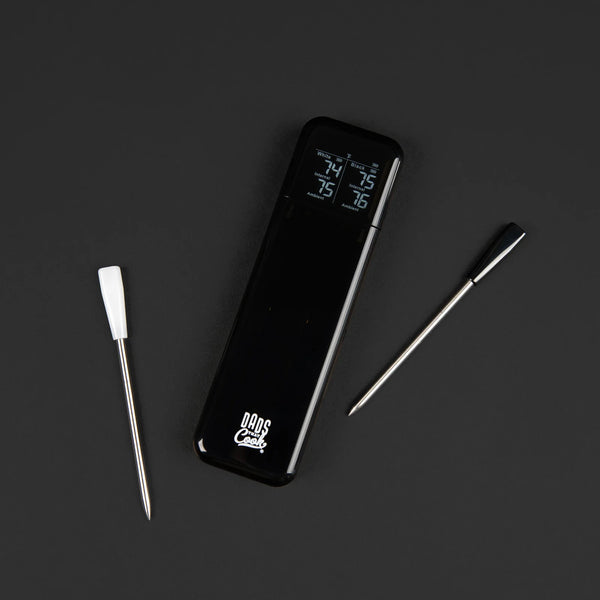
The right thermometer is the one you will actually use. If you want a straightforward tool for steak night, grilled chicken, and roast dinners, choose a quick instant-read digital model with a thin stainless probe, readable screen, and dependable construction. The Dads That Cook digital instant-read thermometer fits that job: a direct tool for cooks who want clean answers when the heat is on.
If your weekends revolve around smoke rolling from the backyard, a leave-in multi-probe thermometer deserves space in your barbecue kit. It lets you manage the long game while keeping your attention where it belongs - with the people waiting to eat.
The next time a great cut hits the grill, do not gamble on the poke test or a timer alone. Check the center, trust the reading, give the meat its rest, and bring it to the table with the kind of confidence a hard-earned meal deserves.