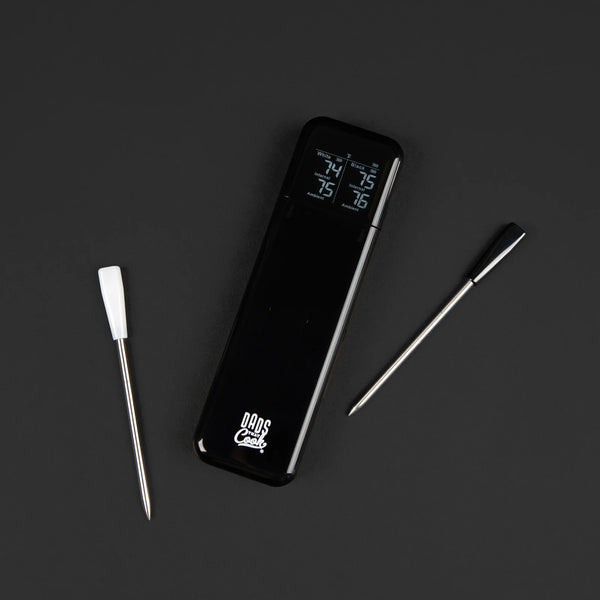
A steak can look perfect on the outside and still miss the mark in the center. Chicken can carry a beautiful crust while the thickest part needs another few minutes. That is why the best thermometer features explained are not just specs on a box. They are the difference between guessing and serving dinner with confidence.
For dads who take the grill seriously, a thermometer is not a backup plan. It is part of the move. You sharpen the knife, prep the protein, build the fire, and verify the finish. Here is what separates a capable instant-read thermometer from a gadget that ends up buried in a drawer.
Best thermometer features explained: Start with speed
Speed is the first feature that changes how you cook. An instant-read thermometer should give you a stable reading in just a few seconds. If it takes 10 or 15 seconds to settle, you are holding the grill lid open too long, losing heat, and hovering over a hot grate while everyone asks when dinner is ready.
Fast readings matter most when timing is tight. Think reverse-seared ribeye, pork chops over direct heat, or a row of chicken thighs that are all slightly different sizes. A quick thermometer lets you check several pieces without turning the cook into a science project.
Speed alone is not enough, though. The number has to settle reliably. A thermometer that jumps from 128 to 141 to 134 when the probe is held still creates more questions than answers. Look for a tool designed to reach a stable final temperature quickly. That is the number you can cook by.
Accuracy is where confidence comes from
A thermometer can be fast and still be wrong. Accuracy is the feature that protects the meal and the people around your table.
For everyday home cooking, a thermometer with accuracy around plus or minus 1 degree Fahrenheit is a strong target. That level of precision gives you control over a medium-rare steak, helps you pull pork before it dries out, and keeps poultry out of the danger zone without cooking it into submission.
A few degrees may not sound like much until you are cooking a thick steak. Pulling a ribeye at 128 degrees instead of 134 degrees can be the difference between rosy, juicy slices and a steak that has pushed past the finish you wanted after resting. Carryover cooking is real, especially with large cuts, cast-iron searing, and high-heat grilling.
Accuracy also depends on technique. Insert the probe into the thickest part of the food, avoiding bone, gristle, and large pockets of fat. On a steak or chop, slide the probe in from the side toward the center. That approach gives you a clearer read on the true internal temperature instead of the hotter exterior.
Check the tool before the big cook
Even a quality thermometer deserves an occasional reality check. Ice water should read close to 32 degrees Fahrenheit, while boiling water should be close to 212 degrees Fahrenheit at sea level. Altitude changes the boiling point, so do not panic if your reading differs from 212 when you live high above sea level.
This quick test is especially useful before a holiday meal, a big barbecue, or any cook where you are serving a crowd. Great gear earns trust through repeatable results.
A readable display beats fancy clutter
When smoke is rolling, the sun is dropping, and you have one hand on the tongs, you should not need to squint at a tiny screen. A large, high-contrast digital display is one of the most useful thermometer features because it keeps the information clear when conditions are not.
A backlit screen is worth having if you often grill after work or cook outdoors in the evening. It is not about extra flash. It is about being able to read 145 degrees at a glance instead of fumbling for your phone flashlight.
Rotation can be useful, too. An auto-rotating display lets you read the screen whether you approach a roast from the left, right, or above. It is a convenience feature, not a must-have, but convenience matters when it keeps your attention on the food.
Skip screens overloaded with modes you will never use. You want bold digits, a sensible layout, and controls you can understand without digging for the manual. The best kitchen tools make you feel more capable, not more distracted.
Probe design matters more than it gets credit for
The probe is the part that goes to work. A thin, pointed stainless-steel probe slips into meat with less damage and reaches the center more easily than a bulky tip. That matters when you are checking delicate fish, thin pork chops, burgers, or a steak you want to keep juicy.
Probe length involves a trade-off. A longer probe gives your hand more distance from flare-ups and hot oven walls. A shorter probe can feel more nimble for small cuts. For most backyard cooks, a probe long enough to safely check a roast or reach past a hot grill grate is the sweet spot.
Pay attention to the probe's transition point near the handle. You want enough clearance to keep fingers away from heat, but remember that most instant-read thermometers are not meant to live inside the grill or oven during cooking. They are built for quick checks. Leave-in probes serve a different job.
Instant-read versus leave-in thermometers
An instant-read thermometer is your closer. Use it to spot-check chicken, verify steak doneness, and test the center of a burger before it comes off the heat. It is quick, mobile, and ideal for hands-on cooking.
A leave-in probe thermometer is better for long cooks such as brisket, pork shoulder, turkey, or prime rib. It stays in the meat while you monitor progress from outside the cooker. Many serious cooks keep both because the tools solve different problems.
If you are buying one thermometer first, make it an accurate instant-read model. It will earn its place on weeknight dinners, Saturday burgers, holiday roasts, and every cook in between.
Heat resistance and durability are non-negotiable
Kitchen gear takes hits. It gets splashed with marinade, set down near the grill, dropped on the patio, and wiped clean in a hurry. A thermometer should feel solid in your hand, with a body and probe hinge that do not feel loose after a season of use.
Water resistance is a practical advantage. It makes cleanup less stressful and gives you more protection against rain, steam, and messy hands. Water-resistant does not automatically mean dishwasher-safe, though. Unless the manufacturer specifically says otherwise, hand-wash the probe and wipe the body clean rather than soaking the entire unit.
Look for a thermometer with a temperature range that covers your normal cooking. Most cooks need dependable readings from cold refrigeration temperatures through high grilling and roasting temperatures. You do not need a massive range just to brag about the spec sheet. You need a range that performs accurately where food actually cooks.
At Dads That Cook, the goal is simple: put reliable tools in the hands of people who want to feed their crew well. A thermometer should feel like part of that same kit - tough, clear, and ready when the heat is on.
Useful extras, without the gadget overload
A few extra features can make a thermometer easier to live with. Auto-off helps preserve battery life. A magnetic back keeps the tool within reach on a metal grill shelf or refrigerator. A folding probe protects the tip in a drawer and makes the thermometer easier to store.
Temperature hold can help when you need to pull the thermometer away from the heat before reading it. Calibration capability is another strong feature, particularly if you cook often and want to confirm long-term accuracy.
Do not let extra functions distract from the fundamentals. A thermometer with ten buttons and poor accuracy is still a poor thermometer. Put speed, accuracy, readability, and a dependable probe first. Everything else is icing on the brisket.
Use the right temperature for the food in front of you
A great thermometer only helps if you use it at the right moment. Check several spots on large or uneven cuts. Burgers and chicken breasts can cook unevenly, especially over a two-zone fire. For ground meats, aim for 160 degrees Fahrenheit. Poultry should reach 165 degrees Fahrenheit. Whole cuts of beef, pork, lamb, and veal are generally safe at 145 degrees Fahrenheit with a three-minute rest, while fish is typically cooked to 145 degrees Fahrenheit.
Those temperatures are safety targets, not a replacement for judgment. A steak's final doneness depends on thickness, heat level, resting time, and personal preference. Pulling it before the final target can be the smart move when carryover heat will keep working after it leaves the grill.
The next time you fire up the grill, do not guess because the crust looks right. Check the center, trust the reading, let the meat rest, then slice clean and serve proud.