A great steak does not need to be stripped bare. It needs smart prep. Knowing how to trim fat from steak means keeping the fat that brings flavor and moisture while removing the chewy, tough, or flare-up-causing pieces that can ruin an otherwise killer cook.
This is not surgery. It is controlled, confident knife work. Get the steak cold, use a sharp blade, and let the shape of the meat tell you what stays and what goes. The goal is simple: every bite should be tender, beefy, and worth fighting over at the dinner table.
Know Which Fat Should Stay
Not all fat is built the same. Before you make the first cut, look at where the fat sits.
Marbling is the thin white webbing inside the muscle. Leave it alone. As the steak cooks, marbling melts into the meat and brings richness, tenderness, and that steakhouse flavor everybody wants. You cannot trim it out without turning a beautiful ribeye or strip into a sad, hacked-up piece of beef.
External fat sits along the outside edge of a steak as a fat cap. Some of it is useful. On a strip steak, leaving a thin layer can protect the edge and add flavor. On a ribeye, the outer cap can render nicely if it gets enough direct heat. But a thick, hard strip of fat will not fully render during a quick steak cook. It will shrink, curl the steak, feed grill flare-ups, and leave a chewy bite on the plate.
Then there is seam fat - the dense, waxy white stuff between muscles. This fat is often tougher than a surface fat cap and does not melt the same way. On certain cuts, especially a whole ribeye or tri-tip, removing large seams improves both texture and presentation.
Finally, watch for silver skin. It is not fat, but it gets mistaken for it all the time. Silver skin is a thin, shiny membrane that stays tough when cooked. Remove it. A clean cut here makes a real difference.
The Best Time to Trim Fat From Steak
Trim steak while it is cold, straight from the refrigerator or after 15 to 20 minutes in the freezer. Cold fat is firm. Firm fat gives you clean lines and keeps your knife from slipping around the meat.
Do not try to trim a steak that has been sitting on the counter for an hour. Soft fat smears, the steak gets slippery, and you are more likely to carve away good meat with the bad. Work cold, then let the steak sit out briefly before cooking if that fits your normal routine.
Pat the steak dry first. A dry surface gives you a better grip and helps you see the difference between meat, fat, and membrane. Put it on a stable cutting board, not a plate that slides every time you move your knife.
What You Need for a Clean Trim
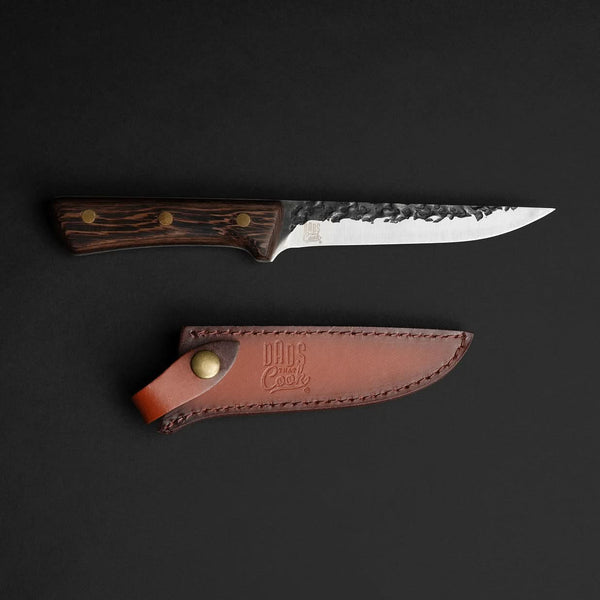
A sharp 6-inch boning knife is the right tool for most steak trimming because its narrow, flexible blade can follow curves and slide under silver skin without taking big chunks of meat with it. A sharp chef knife can handle simple fat-cap work, but a wide, stiff blade is less precise around seams.
More important than the knife style is the edge. A dull knife forces you to push. Pushing causes slips, ragged cuts, and wasted steak. Keep the blade sharp enough to slice through fat with light pressure. At Dads That Cook, that kind of control is the whole point: strong steel, a balanced grip, and a cut that goes exactly where you tell it to go.
Keep a small bowl or scrap tray beside the board. Toss trimmings there as you work. Fat on the board gets slick fast, and a clean workspace makes you faster and safer.
How to Trim Fat From Steak Step by Step
Start by inspecting both sides of the steak. Identify the thick outer fat, any tough seams, and any silver skin. Do not start cutting just because you see white. Take a second and decide whether it is valuable marbling or something that will stay rubbery.
Hold the steak steady with your non-knife hand, keeping your fingertips curled back. With the knife angled slightly away from the meat, make a shallow cut under the edge of the fat cap. You are creating a starting point, not sawing through the steak.
Once you have a flap of fat, grip it gently and pull it upward to create tension. Then use short, smooth strokes with the knife nearly flat against the meat. Let the blade skim under the fat. If you angle down too steeply, you will remove good beef along with it.
For a thick fat cap, trim it down rather than removing every trace. A layer roughly 1/8 inch thick is a solid target for many steaks cooked over high heat. That is enough to add flavor without leaving a giant strip of unrendered fat. If you are pan-searing, you may choose to trim a little closer because the fat will not have as much time over open flame to render.
When you find silver skin, slide the knife just underneath it and lift a small tab. Pull the membrane taut, then move the blade forward in shallow strokes. Keep the blade tipped slightly upward toward the silver skin, not downward into the meat. Slow and steady wins this one.
For hard seam fat, use the natural separation between muscles as your guide. Ease the tip of the knife into the seam and make small cuts as you pull the muscles apart with your fingers. Stop when the fat is gone or when separating further would turn a single steak into several uneven pieces. Better texture is the mission. Butchering a good steak into scraps is not.
How Much Fat Should You Leave?
It depends on the cut and how you plan to cook it. That is the part most quick trimming advice misses.
A ribeye has serious internal marbling and a rich outer cap. Leave the marbling and keep a modest amount of the outside fat. Trim only the thick, hard sections and any large seam fat that will not render. A ribeye is supposed to be rich.
A New York strip usually has one obvious outer strip of fat. Trim it to a thin, even layer, especially if it is thicker than about 1/4 inch. You can also make a few shallow slits through the fat edge, spaced about an inch apart, without cutting into the meat. This helps prevent the steak from curling in the pan or on the grill.
Filet mignon is naturally lean and usually needs very little trimming. Remove silver skin and any tough exterior bits, but do not go looking for fat to remove just for the sake of it. Its clean, tender texture is the whole game.
Sirloin, flank, skirt, and hanger steaks often benefit from more careful trimming. Remove tough surface fat and silver skin, but be especially mindful of grain direction. For these cuts, slicing against the grain after cooking matters just as much as trimming before cooking.
Avoid These Steak-Trimming Mistakes
The biggest mistake is treating all white material as waste. Marbling is money. Keep it.
The next is trimming too deeply. If every pass of the knife removes a red strip of meat, flatten your blade angle. You are not filleting a fish. You are cleaning the steak while preserving its shape and thickness.
Another common mistake is trying to trim after cooking. You can cut away an unwanted fatty edge on the plate, but you cannot undo a steak that curled, cooked unevenly, or sent flames roaring up because of too much exterior fat. Make the call before the steak hits the heat.
Do not throw those trimmings away automatically. Clean beef fat can be rendered slowly for cooking potatoes, sautéing onions, or building serious flavor into a cast-iron meal. Keep silver skin and tough scraps separate, since those are not worth saving.
Season and Cook the Steak You Just Prepped
Once trimmed, season the steak with enough kosher salt to cover the surface evenly and add black pepper if you want it. Keep the seasoning simple when the beef is good. Let the crust do the talking.
Get your grill or skillet properly hot before the steak goes down. A trimmed steak still needs aggressive heat to build a deep brown crust. If you left a thin fat edge on a strip or ribeye, hold that edge against the hot grate or pan with tongs for 30 to 60 seconds to start rendering it before cooking the broad sides.
Use an instant-read thermometer instead of guessing. Pull the steak a few degrees before your final target, then let it rest so the juices settle back into the meat. For most steaks, slice against the grain and serve immediately.
A sharp knife, a cold steak, and a little patience are all it takes. Leave the fat that earns its place, cut away the fat that fights back, and put a better steak on the table for your crew.