A brisket can look like a champion from across the yard, bark set, smoke rolling, everybody already reaching for a plate. Then you slice it and find a dry flat or a center that needed another hour. That is why a smoker thermometer review matters. Great barbecue is not guesswork. It is fire management, temperature control, patience, and knowing exactly what is happening inside the meat.
The right thermometer will not make bad barbecue good by itself. It will, however, stop you from making the kind of expensive mistake that turns a prime brisket or rack of ribs into a lesson. For dads who take pride in feeding the crew, that is reason enough to choose carefully.
Smoker Thermometer Review: The Tools Worth Buying
The first thing to understand is that there is no single best thermometer for every cook. A quick steak dinner, an all-night pork butt, and a six-hour turkey smoke ask different things from your gear. The strongest setup is usually not one thermometer that claims to do it all. It is a reliable leave-in probe for the long cook and a fast instant-read thermometer for the finish line.
A leave-in thermometer stays in the meat while it cooks. Most models send temperature readings to a receiver, app, or base unit, so you can monitor the smoker without lifting the lid every 15 minutes. That matters because every lid opening dumps heat and smoke, then forces your cooker to recover.
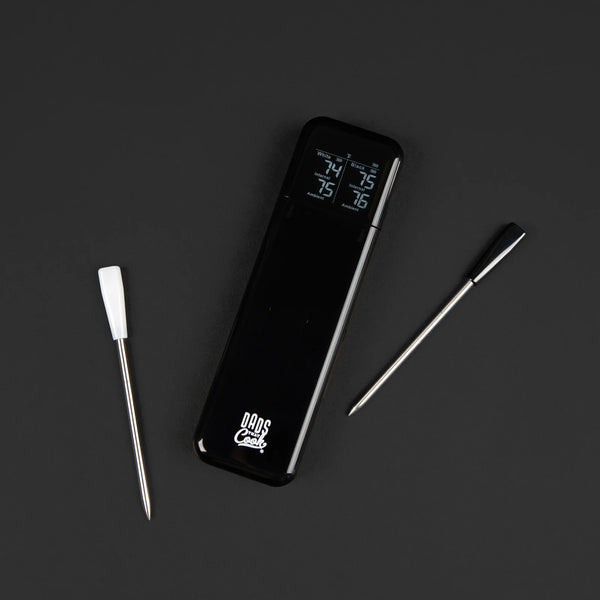
An instant-read thermometer is your closer. It checks several spots quickly, confirms chicken near the bone is done, tests tenderness in a brisket flat, and gives you a final reading before food hits the cutting board. Dads That Cook's digital instant-read thermometer fits this role: a straightforward tool for fast checks when precision matters most.
If you smoke frequently, treat these as teammates, not rivals. The leave-in probe guards the process. The instant-read confirms the result.
What Separates a Good Smoker Thermometer From a Gimmick
Big screens, flashy apps, and a dozen probe ports look impressive in product photos. They are not the first things to judge. Start with accuracy, probe quality, signal reliability, and how the tool behaves when your hands are greasy and dinner is running late.
Accuracy is the whole point
For barbecue, a thermometer should be accurate enough to give you confidence in the ranges that matter. A few degrees can change your decision on chicken, fish, pork, or a medium-rare tri-tip. More important than chasing a perfect number is consistency. If your thermometer reads slightly high but does so predictably, you can account for it. If it jumps around, you cannot trust it.
Test a new unit before relying on it for a holiday cook. Check it in ice water and boiling water, following the manufacturer's instructions and adjusting for elevation if needed. This takes minutes and tells you whether the tool is ready for game day.
Probe count should match your cooking style
One probe works for a single roast or rack. Two probes are better for most backyard cooks because one can track meat temperature and the other can monitor the smoker grate temperature. That second reading is more useful than many people realize.
Your smoker's built-in dome thermometer may be 20, 30, or more degrees different from the temperature at grate level, where the meat actually sits. A grate probe helps you see hot spots, fuel dips, and temperature swings before they mess with the cook.
Four or more probes make sense when you regularly smoke multiple pork butts, chickens, or racks at once. They are also useful when you want to watch different zones in a larger offset smoker. But more ports are not automatically better. Extra wires can turn into a tangled mess if you only cook one or two proteins at a time.
Wired versus wireless is a real trade-off
Wired probe thermometers are usually dependable, affordable, and easy to understand. The probe connects to a display unit through a heat-resistant cable. They are excellent if you stay near the patio, garage, or kitchen during the cook.
Wireless systems offer freedom. You can coach a game, prep sides, or hang with guests while keeping an eye on the pit from your phone. The downside is that wireless range can shrink through brick walls, metal siding, and distance. Apps can also be annoying if alerts drop or a battery quits at the wrong moment.
For an overnight brisket, alarms are worth having. Set a high and low alert for the smoker temperature, plus a target range for the meat. Just do not set alerts so tight that your phone buzzes every time the cooker moves two degrees. Smoking involves natural swings. You want warnings that demand action, not noise that trains you to ignore them.
Fast readings matter at the finish
A leave-in probe tells you the internal temperature. It does not always tell you whether a large cut is tender. Brisket and pork butt are prime examples. They may reach a typical target range yet still feel tight when probed. That is where an instant-read thermometer earns its spot.
Push it into several areas of the flat, point, and thickest section without hitting fat pockets. When the probe slides in with very little resistance, like softened butter, you are getting close. Temperature gives you direction. Feel makes the final call.
The Temperatures That Need Your Attention
Numbers matter, but barbecue is not a video game where every cut has one magic score. Meat thickness, cooker temperature, fat content, and resting time all affect the outcome. Use these as working targets, then let appearance and tenderness finish the job.
Chicken should reach 165 degrees Fahrenheit in the thickest part. Check near, but not against, bone. Thighs often taste better when cooked beyond that minimum because the connective tissue has more time to soften.
Pork ribs are another case where tenderness wins over a single number. The meat is thin and wrapped around bones, which makes temperature readings less useful than checking for bend, pullback, and a toothpick sliding between the bones with little resistance.
Pork butt often becomes probe-tender somewhere around 195 to 205 degrees Fahrenheit, but do not rush it because the display says 203. Brisket works the same way. Many are ready in that neighborhood, but the flat needs to feel tender throughout. A finished brisket can still suffer if you skip the rest. Hold it properly, then slice with a sharp knife across the grain.
For steaks, chops, burgers, and smoked chicken, an instant-read thermometer is especially valuable because carryover cooking can move the final temperature after the meat leaves the heat. Pulling at the right moment takes practice. Accurate readings make that practice pay off faster.
Mistakes That Make Good Thermometers Look Bad
Most thermometer problems start with placement. Do not bury a probe in a fat seam, press it against bone, or place the tip too close to the surface. You are not measuring the whole cut. You are measuring the small area around the probe tip.
On a brisket, aim for the thickest part of the flat. On poultry, work into the deepest section of breast or thigh. On pork butt, avoid the bone and take readings in more than one area. If one spot is much hotter or cooler than the rest, trust the pattern, not the first number you saw.
Cable care also matters. Keep wired probes away from direct flame, pinch points, and the hottest edge of a smoker lid. Clean probe shafts after every cook, but avoid soaking electronic connections unless the manufacturer says they are waterproof. Replace damaged probes. A cheap worn-out probe can ruin a very expensive piece of meat.
Finally, do not confuse pit temperature with meat temperature. A smoker can be cruising at 250 degrees while the center of a pork butt barely moves during the stall. That is normal. The thermometer is not failing. The meat is evaporating moisture and taking its time. Hold your fire, trust the process, and stop poking the lid open.
The Best Setup for Most Backyard Pitmasters
For most dads, the smart buy is a two-probe leave-in thermometer plus a dependable instant-read model. One leave-in probe goes in the meat. The other sits at grate level near the food, not directly over a flame. The instant-read stays clean, dry, and ready for final checks.
That setup gives you control without turning a Saturday cook into a NASA launch. You will know when the fire drifts, when the protein reaches the next stage, and when it is actually ready to rest. More importantly, you can spend less time hovering over the smoker and more time with the people waiting to eat.
Your next cook does not need more guesswork or another lid lift. Put the probe in the right place, keep the fire steady, and let that first clean slice tell the whole table you came prepared.