A flank steak can come off the grill with a killer crust, a perfect rosy center, and all the right flavor - then turn chewy because it was cut the wrong way. Knowing how to slice flank steak is the move that turns a hard-earned cook into a plate your family remembers.
This cut has big, obvious muscle fibers. Your job is simple: shorten those fibers with every slice. Rest the meat, find the grain, cut across it, and keep your knife sharp. Sear. Slice. Repeat.
Why Flank Steak Needs Special Attention
Flank steak comes from the cow's abdominal area. It is lean, deeply beefy, and built with long, pronounced fibers. That makes it a great choice for the grill, cast-iron skillet, fajitas, steak salads, sandwiches, and rice bowls. It also means it has less forgiveness than a ribeye.
Fatty steaks stay tender partly because their marbling melts as they cook. Flank steak delivers its tenderness through technique. Don't overcook it, give it time to rest, and slice it correctly. Miss the last step and even medium-rare steak can feel tough.
The good news: the grain is easy to spot. Look closely at the raw steak before seasoning. You will see lines running in one direction across the meat. Those lines are the grain, and they are the map for your final cut.
The Rule: Slice Against the Grain
To slice against the grain, cut perpendicular to the direction those muscle fibers run. If the fibers run left to right, make your slices from top to bottom. Every cut breaks long fibers into short, easy-to-chew pieces.
Cutting with the grain does the opposite. It leaves long strands intact, so every bite requires more work from your teeth. The steak has not suddenly become overcooked. It was just sliced in a way that works against you.
Before the steak hits heat, take five seconds to identify the grain. It can become harder to see after a dark sear, a spice rub, or a glossy sauce. If you need a reminder, make a small notch on the edge of the steak in the direction of the grain. That little mark makes slicing time easier when the crowd is ready to eat.
Let the Steak Rest Before You Cut
Pulling flank steak from the heat and cutting it immediately is tempting. The smell is rolling, the crust looks right, and everybody is hovering near the cutting board. Hold the line.
Rest the steak for 5 to 10 minutes, loosely tented with foil if the room is cool. During that rest, the juices settle back through the meat. Slice too early and those juices run onto the board instead of staying in each bite.
A thinner flank steak may need only five minutes. A thicker piece, especially one cooked over high grill heat, benefits from closer to 10. Do not wrap it tightly in foil. Tight wrapping traps steam and can soften the crust you worked to build.
Resting is also a good time to check doneness with an instant-read thermometer next time around. For medium-rare flank steak, pull it around 125 to 130°F. Carryover heat will raise the temperature a few degrees while it rests. If your crew prefers medium, aim for roughly 135 to 140°F before resting. Beyond that point, lean flank steak starts giving up tenderness fast.
How to Slice Flank Steak Step by Step
Set the rested steak on a stable cutting board. Use a board large enough to keep the meat from crowding the edge, and make sure it is not sliding around. A damp towel underneath the board gives you a locked-in work surface.
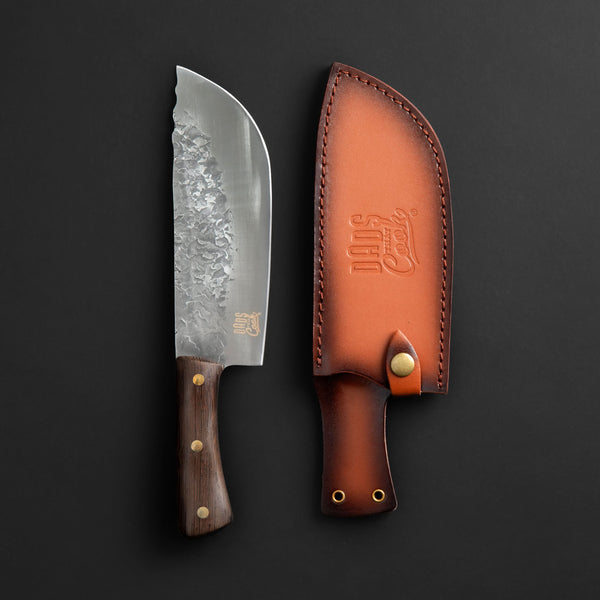
Use a sharp chef knife or slicing knife with a long, smooth edge. A dull blade crushes the crust, tears the meat, and makes you push harder than you should. A sharp, well-balanced knife does the work cleanly, giving you better-looking slices and better control.

First, find the grain again. Most flank steaks have fibers that run the length of the cut, but the direction can shift slightly from one end to the other. If you see the grain changing direction, divide the steak into two or three manageable sections. Turn each section so the fibers run across your knife rather than alongside it.
Then slice across the grain with long, confident strokes. Avoid short, aggressive sawing. Place the blade at a slight 30- to 45-degree angle to the cutting board and draw it through the steak. That bias cut creates wider, more tender slices without turning the meat into thin shreds.
For a main-course steak platter, aim for slices about 1/4 inch thick. For fajitas, tacos, sandwiches, or grain bowls, go a little thinner - around 1/8 inch. Thin slices stretch the steak further and make every bite easy to eat. If you are serving a crowd, that matters.
The Knife Angle Makes a Difference
Straight-down slices work, but a slight angle is better for flank steak. Think of it as cutting on a diagonal across the surface, not chopping vertically. You expose more of the pink interior, create a broader slice, and shorten the muscle fibers even more.
There is a trade-off. Slice too aggressively on the bias and the pieces get oversized and floppy, especially for tacos. For fajitas, keep the diagonal modest and stay thin. For a steak board or dinner plate, a more noticeable angle looks great and gives each slice a restaurant-style finish.
Keep your non-knife hand in a claw shape, with fingertips tucked back and knuckles guiding the side of the blade. This is not fancy chef stuff. It is basic control. Slow is smooth, smooth is fast.
Common Flank Steak Slicing Mistakes
The biggest mistake is cutting with the grain. It happens when cooks follow the length of the steak because it feels natural. Always stop, look for the fibers, and turn the meat before the first cut.
The next mistake is slicing too thick. Thick slabs may look hearty, but they ask more from a lean, fibrous cut. Unless you are deliberately serving steakhouse-style portions, thinner slices are the better call.
Another problem is using the wrong tool. A serrated knife can shred the exterior. A dull knife can squeeze out juices and leave ragged edges. Reach for a sharp chef knife with enough blade length to complete each slice in one controlled motion. A full-tang knife that feels secure in your hand helps you stay steady when the board gets slick.
Finally, do not drown the steak in sauce before slicing. A finishing sauce is great, but a heavy coating can hide the grain and make clean slicing harder. Cut first, then spoon chimichurri, pan juices, or your favorite barbecue sauce over the arranged slices.
When the Grain Changes Direction
Not every flank steak is perfectly uniform. One end may run at a slightly different angle, or a thicker center section may show a shift in the fibers. Do not force one slicing direction across the whole steak.
Instead, cut the steak into sections where the grain is consistent. Rotate each section, then slice against its individual grain. This small adjustment separates a decent result from a dialed-in one.
The same approach works for other long-fiber cuts, including skirt steak, hanger steak, and tri-tip. The details change, but the principle stays strong: inspect the meat, identify the fibers, and cut across them.
Serve It While It Still Shines
Arrange the slices in a loose fan on a warm platter instead of piling them into a deep bowl. That keeps the crust visible, makes grabbing portions easier, and gives the meal some earned swagger. Finish with a pinch of flaky salt, a squeeze of lime, or a spoonful of sauce if the recipe calls for it.
A properly sliced flank steak does more than look good. It lets a hardworking, budget-friendly cut eat tender and juicy from the first bite to the last. Put in the attention at the cutting board, then get it on the table and feed your people like you mean it.