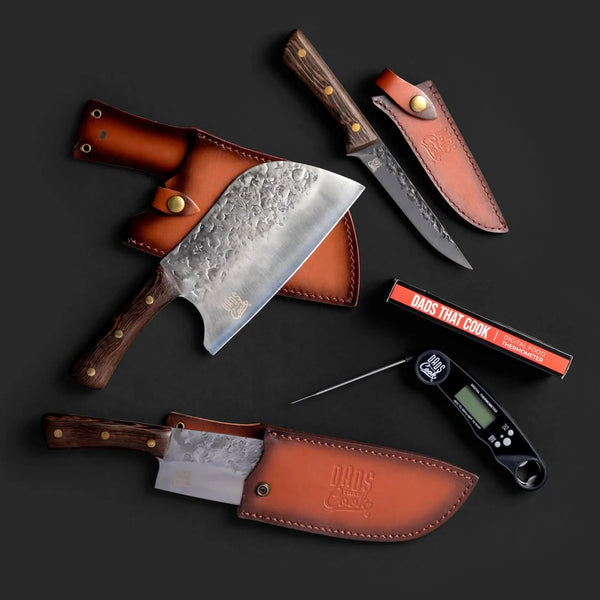
The brisket is resting. The burgers are firing. Everybody is hungry. That is not the moment to wrestle a dull knife, guess at doneness, or flip chicken with a flimsy fork. Great barbecue tools do more than fill a drawer. They give you control when the heat is high and the whole crew is waiting on the plate.
A serious grill setup is not about buying every gadget with a bottle opener attached. It is about choosing a few hard-working tools that handle the jobs that matter: prepping meat cleanly, managing food over heat, checking temperature accurately, and slicing the finished product without wrecking it. Get those right, and you can cook with more confidence from the first trim to the final carve.
Start With Barbecue Tools That Do Real Work
The best barbecue tools earn their place because they solve a problem. A good knife gives you clean trim and clean slices. A dependable thermometer stops you from serving undercooked chicken or turning a perfect steak into shoe leather. Long-handled tools keep your hands out of the fire without making you feel disconnected from the cook.
Build around the food you actually make. If ribs, brisket, and tri-tip are your weekend staples, prioritize a sharp carving and prep setup. If you are the burger-and-hot-dog captain for a crowd, tongs, a sturdy spatula, and a thermometer will see more action. The point is not to own more gear. The point is to have the right gear ready when it counts.
A sharp knife handles prep and the victory lap
A knife belongs at the center of any barbecue setup, even though most of the cooking happens outdoors. Before the grill gets hot, you may be trimming silver skin from ribs, removing fat from a brisket, cutting chicken into portions, or slicing onions and peppers for the side game.
One quality chef knife can handle much of that work. For larger cuts and heavier vegetables, a cleaver gives you extra weight and a broad blade. A flexible boning knife is the better call when you need to work close to bones, shape a rack of ribs, or separate a cut without wasting good meat.
Construction matters here. A full-tang stainless-steel knife has the balance and strength to take on repeated prep without feeling like a toy in your hand. Keep it sharp, use a stable cutting board, and let the blade do the work. Forcing a dull knife through meat is slower, messier, and far more likely to send it somewhere it should not go.
After the cook, the knife gets its second shift. A sharp blade cuts brisket against the grain without crushing the bark. It slices steak cleanly instead of squeezing out the juices. It portions ribs with less tearing. You put in the work to build that crust, smoke ring, and tenderness. Do not destroy the payoff with a dull edge.
An instant-read thermometer beats guesswork
Color, timing, and the touch test can tell you something about a piece of meat. They cannot tell you its internal temperature with the same certainty as a fast, accurate thermometer. That is why an instant-read thermometer is one of the most valuable barbecue tools a dad can own.
For chicken and turkey, temperature is the safety check. For steak, pork chops, and burgers, it is the difference between hitting the target and hoping you got close. For a thick pork shoulder or brisket, a quick read can also tell you whether you are still pushing through a stubborn section or nearing that tender finish line.
Use it correctly. Insert the probe into the thickest part of the meat and avoid bone, which can give you a misleading reading. On steaks and thinner cuts, come in from the side so the probe reaches the center. Check early enough to account for carryover cooking, especially on a hot, thick steak resting after the grill.
There is a trade-off: a thermometer does not replace experience. You still need to learn how your grill runs, where its hot spots live, and how different cuts behave. But experience gets stronger when it is backed by real information. Temperature gives you the facts. Your instincts help you decide what to do with them.
The Grill-Side Gear That Keeps You in Control
A solid pair of long tongs is the workhorse at the grate. Use them to turn sausages, shift vegetables, move chicken away from flare-ups, and reposition food between direct and indirect heat. Look for a firm grip and enough length to protect your hands without making the tool awkward to control.
A wide, sturdy spatula matters for burgers, fish, and anything that needs support underneath. Thin, bendy spatulas can slide under delicate food, but they are not the right choice for lifting a loaded burger or a heavy piece of salmon. The tool should match the job. Strength wins for bigger food; a thinner edge wins when you need finesse.
A grill brush or grate scraper also belongs in the rotation, but use it with care. Clean grates help prevent sticking and keep old debris from hitching a ride onto dinner. Scrape while the grates are hot, then wipe them down before adding food. If your brush has wire bristles, inspect it often. Many grillers prefer a bristle-free scraper for peace of mind.
Do not overlook heat protection. A pair of well-made heat-resistant gloves gives you the confidence to handle hot grates, move a pan, or manage larger cuts without getting too close to the fire. Gloves do not make you invincible, so stay smart around open flame and hot metal. They simply give you a better margin when the cook gets physical.
A cutting board protects the meal and the blade
Every great cook needs a landing zone. A large, stable cutting board keeps raw prep organized and gives finished meat a proper place to rest and slice. Choose one with enough surface area for the cuts you cook most often. A tiny board turns carving a tri-tip into a balancing act.
For raw proteins, clean the board thoroughly before it sees cooked food. Better yet, keep separate boards for raw meat and ready-to-serve ingredients when your setup allows it. This is not fussy kitchen talk. It is how you protect the people at your table while keeping flavors clean.
A board also protects your knives. Cutting directly on a grill side shelf, metal tray, or patio table can ruin a sharp edge fast. Give that blade a proper surface, and it will stay ready for the next cook.
Buy for Your Cooking Style, Not the Hype
A backyard cook who makes burgers twice a month does not need the same setup as the guy smoking whole packer briskets through the night. Start with your real routine, then add tools when they solve a recurring problem.
If you cook quick weeknight meals, your foundation might be a chef knife, tongs, spatula, thermometer, and cutting board. If low-and-slow barbecue is your thing, add a boning knife for trimming, heat-resistant gloves for managing the pit, and a dependable sharpening tool to keep your blades dialed in. For the dad who hosts every game day, bigger boards and extra serving tools can make the handoff from grill to table less chaotic.
Avoid bargain-bin tools that flex, rust, lose their grip, or fail after one season. Cheap gear can look like a win until it slips while you are moving a hot roast or gives you a false temperature reading. Durable tools cost more upfront, but they show up cook after cook. That is value you can feel in your hand.
Dads That Cook is built around that idea: capable gear for fathers who want to prep with precision, cook with confidence, and put something memorable on the table.
Keep Your Tools Ready for the Next Fire
Good tools need basic care, not a complicated ritual. Wash and dry knives by hand, especially after working with acidic marinades or salty rubs. Hone or sharpen them when they stop cutting cleanly. Clean thermometer probes before and after use. Wipe down tongs and spatulas, and inspect moving parts for looseness.
Store the gear where you can reach it before the grill gets hot. A simple grill caddy, drawer, or dedicated prep station prevents that familiar scramble through the kitchen while flames are already rolling. The calmer your setup, the more attention you can give the food.
The next time you fire up the grill, pick one tool that has been holding you back and replace it with something built for the job. A sharper blade, a true temperature reading, or a stronger pair of tongs can change the entire cook. Feed your people well. Then get ready to do it again.