The burgers are hitting the grates, the kids are asking when dinner is ready, and somebody just opened a drink before you have checked the chicken. That is exactly when a solid backyard grilling equipment guide earns its place. The right tools do not make you a grill master by magic. They give you control when the heat is high, the timing is tight, and the people you love are hungry.
You do not need a patio full of gadgets. You need equipment that works hard, holds up, and helps you turn good ingredients into a meal people remember. Build around the essentials first. Then add the specialty gear that fits how you actually cook.
Start With a Grill That Matches Your Cooking Style
Your grill is the engine. Pick the fuel and format that match the way you want to cook, not the way somebody online says you should cook.
A gas grill is the practical choice for dads who want fast weeknight dinners. Turn the knobs, preheat, and get moving. It gives you dependable heat control for chicken thighs, vegetables, burgers, and pork chops. Look for sturdy grates, a lid that closes cleanly, enough cooking space for your household, and burners that heat evenly from front to back.
Charcoal brings deeper smoke flavor and a more hands-on experience. It takes longer to light and requires more attention, but that is part of the appeal. A kettle grill can handle a hard sear over direct heat or a long indirect cook for ribs and whole chickens. Add a chimney starter and charcoal baskets, and you gain much more control without turning setup into a chore.
Pellet grills make sense if low-and-slow barbecue is your calling card. They feed hardwood pellets automatically and hold steady temperatures with less babysitting. The trade-off is slower startup, dependence on electricity, and less direct high-heat power than many gas or charcoal setups. Great for brisket and pulled pork. Less ideal if your main mission is cranking out thin smash burgers fast.
Backyard Grilling Equipment Guide: The Core Tools
Once the grill is covered, focus on the gear between the raw protein and the finished plate. These are the tools that get used every cookout, not just once for a photo.
A sharp knife and a stable cutting board
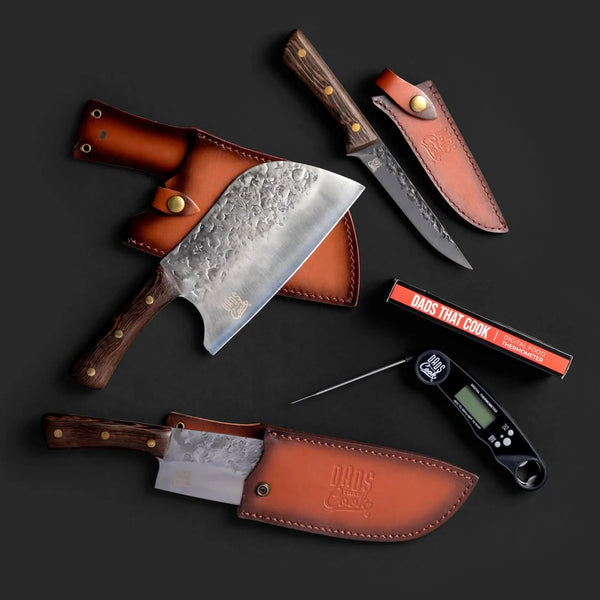
A dull knife tears through meat, crushes tomatoes, and makes prep feel like work. A sharp, full-tang chef knife gives you clean slices through onions, peppers, herbs, and boneless proteins. For bigger jobs, a cleaver gives you authority on thick cuts and sturdy vegetables, while a boning knife earns its keep when trimming silver skin, separating joints, or cleaning up ribs.
Keep a dedicated cutting board under your prep. It needs enough surface area to handle a rack of ribs or a rested tri-tip without juice running onto the counter. Wood and thick composite boards are easier on knife edges than glass or stone. Set a damp towel under the board if it slides. A stable work surface is a safety tool, plain and simple.
Dads That Cook knives are built for this kind of hands-on prep: balanced stainless steel blades that help you trim, slice, and serve with confidence. Whatever knife you use, sharpen it regularly. A quality blade only performs when the edge is ready for battle.
An instant-read thermometer
Color, touch, and timing can give you clues. Temperature gives you an answer. An instant-read digital thermometer is the most valuable tool in the entire setup because it tells you when food is safe and when it is actually done.
Check chicken in the thickest part without touching bone. Probe steaks from the side toward the center. For burgers, take readings from more than one patty if they vary in thickness. Pull large cuts a few degrees before your final target, then let carryover heat finish the job while the meat rests.
A thermometer also protects you from the classic dad-chef mistake: cutting into a steak to see if it is done. Every unnecessary cut lets flavorful juices escape. Probe it, rest it, slice it clean.
Long-handled tongs, a spatula, and a grill brush
Good tongs are an extension of your hand. Choose a long stainless-steel pair with a firm grip and a locking mechanism that does not fight you. Use them to turn chicken, move vegetables, reposition flare-up victims, and pull hot grates when needed. Do not stab meat with a fork unless you enjoy giving juices a direct route to the fire.
A sturdy spatula matters most for burgers, fish, and anything delicate. Go wide enough to support a full burger patty. If smash burgers are on the menu, use a stiff metal spatula paired with a second flat tool or a press to keep the patty from sticking when you flip.
Clean grates improve flavor and prevent sticking, but use the right brush with care. Avoid loose wire-bristle brushes that can shed dangerous metal fragments. A coil-style grill cleaner, scraper, or ball of foil held in tongs gets the job done. Clean while the grates are warm, then lightly oil them before food goes down.
Build a Two-Zone Fire
The difference between frantic grilling and controlled grilling is often heat management. Set up two zones: one hot side for searing and one cooler side for finishing food without burning the outside.
On gas, run one side higher and the other lower or off. On charcoal, bank the coals to one side. This lets you sear a steak hard, then move it away from the flames until the center reaches your target temperature. It also gives flare-ups somewhere to go besides straight into dinner.
Two-zone cooking is especially useful for bone-in chicken, thick pork chops, sausages, and burgers that need cheese melted without blackening the bottoms. The grill lid becomes an oven when you use indirect heat. That is a serious advantage, not a backup plan.
Add Equipment Based on What You Cook Most
Specialty gear should solve a real problem in your backyard. If you cook pizza, a pizza stone or steel built for the grill makes sense. If you love seafood and vegetables, a perforated grill basket saves smaller pieces from the grates. If ribs and brisket are your weekend ritual, add heat-resistant gloves, a water pan, and a reliable leave-in probe thermometer.
For frequent steak nights, consider a cast-iron griddle or plancha. It gives you edge-to-edge contact for a deep crust, catches rendered fat, and turns your grill into a powerful station for fajitas, onions, bacon, and breakfast. Just remember that cast iron needs seasoning and dries quickly after cleaning. It rewards a little care.
Skewers are another smart add for kebabs, shrimp, and vegetables. Flat metal skewers keep food from spinning when you turn them. Wooden skewers work too, but soak them first and keep exposed ends away from the hottest flames.
Do Not Forget the Setup Around the Grill
Great grilling gets easier when your station is organized. Keep raw and cooked food on separate trays. Bring out a clean platter before the meat comes off. Have a trash bowl or small bin nearby for packaging, trimmings, and used paper towels. These small moves keep you from running in and out of the house while the grill is working.
Heat-resistant gloves are worth having for moving hot cookware, adjusting charcoal, or handling a chimney starter. Use gloves for heat, not for grabbing raw chicken and then touching everything else. Food-safe gloves and heat gloves serve different jobs.
A grill cover also deserves more respect than it gets. It protects burners, grates, and hardware from rain, dust, and sun. Let the grill cool completely before covering it, and inspect hoses, connections, ash catchers, and grease trays regularly. A clean grill is safer, lasts longer, and produces better food.
Buy for Control, Not Clutter
There will always be another gadget promising bigger flames, faster cooks, or restaurant-level results. Some are useful. Many are just patio clutter waiting for a drawer.
Before buying, ask one question: Will this help me prep cleaner, control heat better, measure doneness accurately, or serve food with less hassle? If the answer is no, spend that money on better meat, sharper blades, or an extra chair for the people gathering around your table.
The best backyard setup is not the one with the most equipment. It is the one that makes you want to fire up the grill on a Tuesday, cook with purpose, and put a great meal in front of your crew. Sear. Slice. Repeat.