That brisket took hours to earn its place on the cutting board. Don’t wreck the finish with rushed, random cuts. Knowing how to slice brisket correctly is what turns a dark, bark-covered hunk of smoked beef into tender slices that bend, shine, and disappear fast at the dinner table.
A great brisket is not sliced one way from end to end. The muscle fibers change direction, the point and flat cook differently, and a dull blade can squeeze out the juices you worked all day to keep. Bring a sharp knife, a steady board, and a little patience. Then slice like you mean it.
Rest First, Then Start Slicing Brisket Correctly
The brisket is not ready to slice when it comes off the smoker. It is ready when it has rested long enough for the juices to settle back into the meat.
After cooking, let the brisket rest until it drops to a sliceable temperature. For most backyard cooks, that means holding it wrapped in a dry cooler or warm oven, then letting it cool enough that the meat is no longer steaming aggressively when unwrapped. A long rest of at least one hour helps. Two to four hours is even better when your schedule allows it.
Slice too early and the juices rush onto the board instead of staying in each piece of beef. Slice while the brisket is ice-cold and the fat can feel waxy. The sweet spot is warm, rested, and relaxed. It should still be invitingly hot on the plate, but firm enough to cut without crumbling.
Before you make a cut, save any juices collected in the wrap or butcher paper. Skim excess fat if needed, then drizzle those juices lightly over the sliced brisket just before serving. That is not a rescue move. It is a smart finishing move.
Know Your Brisket: Flat, Point, and the Grain
A whole packer brisket has two main muscles: the flat and the point. The flat is leaner, longer, and usually gives you those clean, classic barbecue slices. The point is thicker, fattier, and richer, with a grain that runs in a different direction.
That changing grain is the whole game. Meat fibers are like long rubber bands. Cut parallel to them and each bite feels stringy, even if the brisket cooked beautifully. Cut across them and you shorten those fibers, making the same meat feel far more tender.
Start by looking closely at the flat. You should be able to see the lines of the muscle fibers running in one direction. Your knife needs to travel perpendicular to those lines. As you get closer to the thicker point end, pause and look again. The grain will begin to shift. Do not keep slicing on autopilot.
A simple habit makes this easier: before seasoning and smoking, make a small corner cut across the grain on the flat. That mark gives you a reference after the bark has darkened and the brisket is sitting in a cloud of smoke and applause.
Use a Sharp, Long Blade
Brisket deserves a knife that can make one confident stroke. A long slicing knife is ideal, but a sharp 7.5-inch or 8-inch chef knife can do serious work when you use it with control. The goal is a clean slice, not a sawing contest.
A dull knife tears bark, drags through the meat, and presses precious moisture out of every slice. Sharpen your blade before the brisket comes off the heat. You should be able to glide through the bark with light forward-and-back motion instead of bearing down with your shoulder.
Keep the knife angled slightly downward and use the full length of the blade. Avoid short, choppy cuts. They create ragged edges and can shred a tender flat. A stable cutting board matters too. Put a damp towel underneath if it wants to slide. Big meat calls for a planted work surface.
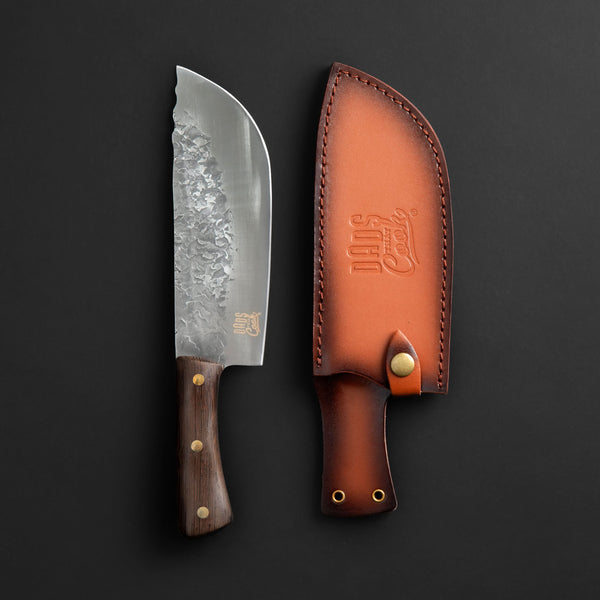
Dads That Cook knives are built for this kind of hands-on work: balanced, full-tang tools that give you control when the whole backyard is watching the first slice.
How to Slice the Brisket Flat
Place the brisket with the flat in front of you and identify the grain. Begin at the thinner end and slice across it, working toward the thicker middle section. Aim for slices about pencil-width thick, roughly one-quarter inch.
That thickness is a strong starting point, not barbecue law. If the flat is exceptionally tender and soft, go a little thicker so slices hold together. If it is firmer than expected, slice slightly thinner across the grain to improve the bite. The brisket will tell you what it needs.
Let each slice fall naturally to the board. Do not stack hot slices in a heavy pile where steam can soften the bark. Arrange them in a loose shingle, then add a light spoonful of reserved juices if the meat needs a little shine.
If a slice breaks apart, do not panic. It may be a sign of an ultra-tender brisket, especially near the middle. Serve those pieces proudly. Chopped brisket sandwiches also exist for a reason, and nobody at the table complains about delicious beef.
Turn the Brisket Before You Reach the Point
As you approach the section where the flat meets the point, stop. This is where good brisket slicers separate themselves from people who simply own a knife.
The grain in the point runs differently from the flat. If you continue cutting in the same direction, the point slices can turn chewy fast. Rotate the brisket about 90 degrees, reassess the visible grain, and cut across the new direction.
Some cooks separate the point from the flat along the natural fat seam before slicing. That is a solid move, especially if you want neat slices from the flat and different treatment for the point. Once separated, slice the point into thicker pieces across its grain, or cube it for burnt ends if that was the plan.
The point carries more fat and can handle thicker cuts. Its slices will look richer and less uniform than the flat, and that is exactly right. Serve them to the people who know where the flavor lives.
Don’t Slice the Whole Brisket at Once
Here is the move that keeps late arrivals happy: slice only what you expect to serve right away. Keep the remaining brisket wrapped or covered so it stays warm and protected.
A fully sliced brisket loses heat and moisture faster than a whole piece. For a family dinner, slice enough for the first pass, then cut more when the platter starts looking thin. For a party, keep the point and flat sections covered separately so guests can choose leaner slices, richer slices, or both.
If you need to hold sliced brisket for a short time, place it in a covered pan with a small amount of reserved juices. Keep the heat gentle. High heat will keep cooking the beef and can push that perfect tenderness over the edge.
Common Brisket Slicing Mistakes
The biggest mistake is slicing with the grain because it looks convenient. The second is using a dull knife and forcing it through the bark. The third is cutting immediately after the cook because everyone is hungry and the brisket smells like victory.
Another mistake is chasing perfectly identical slices. Brisket is a working cut with two distinct muscles, varying thickness, rendered fat, and a bark that has earned some character. Your slices should be intentional, but they do not need to look machine-made.
Finally, do not confuse a thick fat seam with meat. Around the point and flat, trim or separate through the soft rendered seam when it gets in the way. No one needs a giant bite of warm, unrendered fat to prove you smoked a whole packer.
Put the best slices on the platter first. Give the flat its clean, tender presentation. Add rich point pieces alongside it. Then step back, hand somebody a plate, and let the brisket do its job: bring people together for one more bite.