A great chimichurri octopus recipe is not about throwing a tentacle over high heat and hoping for the best. The win comes from a two-part attack: make the octopus tender first, then hit it with enough fire to build real char without turning it rubbery. Add a sharp, garlicky chimichurri, and you have a backyard flex that tastes like it came off a coastal grill.
This is the kind of cook that earns a pause at the table. The edges are smoky and crisp, the middle stays tender, and the sauce cuts through every rich, briny bite. It looks impressive, but it is absolutely within reach for a dad who respects good prep, a hot grill, and a sharp blade.
Chimichurri Octopus Recipe: What You Need
This recipe serves four as an appetizer or two hungry adults as a main course. Buy a whole cooked octopus from a quality fish counter if you can find one. It takes most of the guesswork out of the job and gets dinner moving faster. A raw frozen octopus also works well, but it needs a slow simmer before it ever sees the grill.
For the octopus, grab 2 to 2 1/2 pounds cooked octopus, 1 tablespoon olive oil, kosher salt, black pepper, and one lemon. For the chimichurri, you need 1 cup packed flat-leaf parsley, 2 tablespoons fresh oregano leaves, 3 garlic cloves, 1 small shallot, 1 teaspoon red pepper flakes, 2 tablespoons red wine vinegar, 1/2 cup extra-virgin olive oil, 3/4 teaspoon kosher salt, and black pepper to taste.
If fresh oregano is unavailable, use 1 teaspoon dried oregano. It will not have the same green, fresh punch, but the sauce will still bring plenty of muscle. Skip curly parsley if possible. Flat-leaf parsley has a cleaner flavor and is easier to chop evenly.
Start With Tender Octopus
The grill does not tenderize octopus. It only adds char. That distinction matters.
If your octopus is already cooked, thaw it overnight in the refrigerator if frozen, then pat it aggressively dry with paper towels. Moisture is the enemy of browning. Separate the tentacles from the head, and slice the head into thick, grill-friendly pieces. Leave the tentacles whole for the best presentation and the most surface area for char.
If you bought raw octopus, simmer it first. Set it in a pot with enough water to cover, add a bay leaf and a few peppercorns if you like, then keep the water at a gentle simmer for 45 to 90 minutes. The exact time depends on size. Start checking around 45 minutes. A knife should slide into the thickest part of a tentacle with little resistance, much like a tender potato.
Let the cooked octopus cool in its cooking liquid for 20 to 30 minutes before draining. That small pause helps it stay juicy. Then dry it thoroughly and refrigerate it uncovered for an hour if time allows. Cold, dry octopus is easier to sear hard without overcooking.
Make a Chimichurri That Hits Hard
Chimichurri should taste alive. It is not a smooth green puree and it should not be drowned in oil. You want visible herbs, small pieces of garlic and shallot, bright acidity, and enough red pepper heat to wake up the octopus.
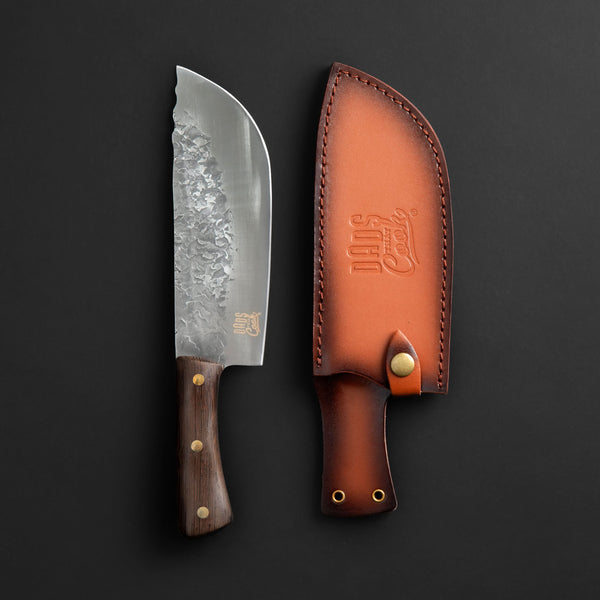
Finely chop the parsley, oregano, garlic, and shallot with a sharp chef knife. A full-tang knife gives you the control to work through herbs without bruising them into green sludge. Add everything to a bowl with the red pepper flakes, vinegar, salt, and a few grinds of black pepper. Stir in the olive oil and let the sauce sit for at least 15 minutes.
Taste it before grilling. It should be punchy, slightly sharp, and a little salty on its own. Once it hits the octopus, that intensity settles into balance. If it tastes flat, add another pinch of salt or a small splash of vinegar. If it is too aggressive, add olive oil a tablespoon at a time.
Do not marinate the octopus in all of the chimichurri for hours. The vinegar can toughen the exterior and dull the clean char you are after. Brush on just a little before grilling, then spoon the rest over after it comes off the heat.
Grill the Octopus Fast and Hot
Set up a clean grill for high direct heat, around 450 to 500 degrees F. For charcoal cooks, build a strong two-zone fire: a ripping-hot side for searing and a cooler side for managing flare-ups. Octopus has natural moisture and can drip enough oil to spark a few flames, especially after it is brushed with olive oil.
Toss the dry tentacles and head pieces with the tablespoon of olive oil, salt, and pepper. Put them directly over the hot side of the grill. Cook for 2 to 3 minutes per side, turning when the edges begin to curl and dark grill marks form. You are reheating the center and building a crust, not cooking the octopus from raw.
Watch it closely. A thin tentacle may be ready in four minutes total, while a thick piece can take six to eight. If flare-ups get rowdy, move the octopus to the cooler zone for a minute, then return it to the heat. Control beats chaos.
Right before pulling it off, squeeze lemon over the octopus. The juice will hiss on the hot surface and add one last layer of brightness. Rest it for two minutes, just long enough to keep the juices where they belong.
A Note on Grill Grates and Skewers
Large tentacles generally sit well on standard grates. Smaller pieces from the head can slip through, so use a grill basket, flat-top griddle, or wide metal skewers. Avoid crowded grates. Give each piece room to make contact with the heat.
A cast-iron pan on the grill is another strong option when weather or equipment makes direct grilling difficult. Get the pan smoking hot, add a light coat of oil, and sear the pieces in batches. You will lose the grill marks, but you will still get deep browning and a serious crust.
Slice, Sauce, and Serve Like You Mean It
Move the grilled octopus to a cutting board and slice the tentacles into 1/2-inch rounds on a slight bias. Keep a few whole tentacles intact if you want the platter to have some swagger. Spoon half the chimichurri onto a serving plate, lay the octopus over it, then finish with the remaining sauce.
Serve it with grilled sourdough, roasted fingerling potatoes, or a simple arugula salad dressed with lemon and olive oil. Crusty bread is especially useful because nobody should let that herb-and-oil runoff go to waste. For a bigger cookout, pair the octopus with grilled shrimp, steak, or chorizo, but give it its own section of the platter. This protein deserves respect.
The best move is to serve it immediately, while the char is still crackling and the chimichurri is bright. Put it in the center of the table, hand out the bread, and let the crew go to work.