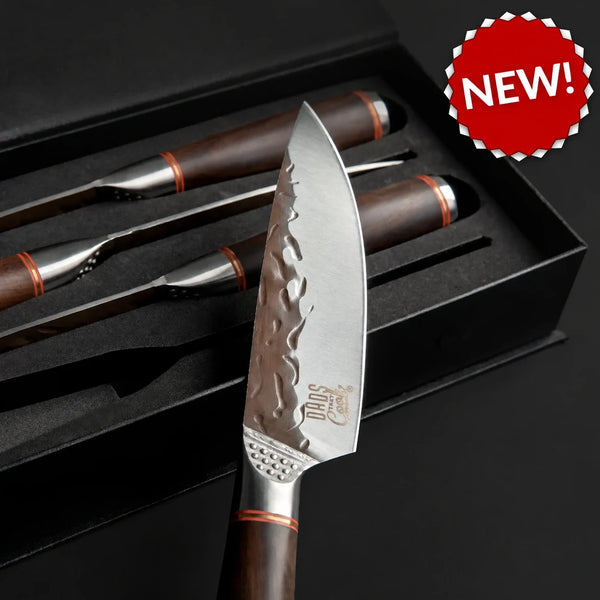
A great steak deserves better than a dull table knife that tears through the crust, drags juices across the plate, and turns the first bite into work. The best steak knife set gives every person at the table a clean, controlled cut - whether you served a reverse-seared ribeye, a thick pork chop, or tri-tip straight from the grill.
This is not just about looking sharp at dinner. A capable steak knife protects the meal you worked to make. It slices through a browned exterior without crushing a tender center. It feels solid in the hand. And after the plates are cleared, it is ready for the next family dinner, game-day cookout, or steak night with the neighbors.
What Makes the Best Steak Knife Set?
Start with the blade. A steak knife should be sharp enough to cut with light pressure. When a guest has to saw back and forth, the knife is failing the meat and the cook. Clean slicing keeps more juice in the steak instead of pressing it out onto the plate.
The best steak knife set also needs balance. A blade can be made from decent steel and still feel awkward if the handle is too light, too bulky, or poorly shaped. The knife should sit naturally in the hand, with enough weight to feel substantial but not so much that it feels like a tool built for splitting firewood.
Durability matters, too. Steak knives live a hard life. They hit ceramic plates, get passed around crowded tables, and sometimes end up in the sink despite your best efforts. Look for stainless steel that resists staining and corrosion, along with construction that can stand up to regular use. A full-tang knife, where the steel runs through the length of the handle, usually delivers the strength and balance serious home cooks want.
There is no single best choice for every kitchen. A guy who hosts twelve-person holiday dinners has different needs than someone cooking two ribeyes on a Tuesday. But the core standard stays the same: the knives should cut cleanly, feel confident, and hold up to the meals that matter.
Straight Edge or Serrated Steak Knives?
This is where plenty of buyers get stuck. Both styles can work. The better choice depends on how you cook and how willing you are to maintain your knives.
A straight-edge steak knife gives you the cleanest cut. It glides through steak fibers rather than tearing them, which is especially noticeable with a properly rested medium-rare steak. Straight edges are also easier to sharpen with the right sharpener. If you care about precision and want the same smooth slicing feel you get from a good chef knife, this is the move.
Serrated steak knives have small teeth along the blade. They grip crusty surfaces well and can stay usable for a long time without noticeable sharpening. That makes them practical for households that want low-maintenance tools. The trade-off is that a serrated blade can rip softer meat fibers rather than slice them cleanly, and sharpening one properly is more involved.
For the dad who takes pride in the cook, a sharp straight edge is hard to beat. It gives a steak the finish it earned on the grill. For a busy household that wants grab-and-go convenience, a quality serrated set can still serve dinner well. The problem is not serration itself. The problem is a cheap serrated knife with flimsy steel and a handle that feels like an afterthought.
Blade Steel Is More Than a Label
You do not need to become a metallurgy expert before buying steak knives. Still, the steel tells you a lot about what you can expect after six months of real dinners.
Stainless steel is the practical choice for most home cooks. It resists rust, cleans up easily, and handles everyday use without demanding a special storage ritual. Better stainless steel can take a fine edge and hold it longer, though every knife eventually needs sharpening. That is normal. A knife that gets used is a knife doing its job.
High-carbon stainless steel is often a strong middle ground. It combines the edge performance associated with carbon steel with the stain resistance people expect from stainless. Exact steel grades are useful details, but they should not distract from the full picture. A well-made blade with sound heat treatment, a secure handle, and good geometry will outperform a flashy material claim on a poorly built knife.
Watch out for knives described only as “stainless” with no discussion of construction, edge, or care. That does not automatically mean they are bad, but it gives you less to work with. The best steak knife set should feel like a long-term kitchen tool, not a temporary accessory that happens to come in a nice box.
Full-Tang Construction Brings Control to the Table
A full-tang steak knife has blade steel extending through the handle. This construction adds strength, helps balance the knife, and gives it a more connected feel in the hand. When you slice into a thick bone-in strip steak, you should feel the blade and handle working as one piece.
Partial-tang knives can be fine for lighter use, particularly at a lower price. But they often feel handle-heavy, and they may not bring the same durability over years of regular dinners. If you are buying a set as a gift for a dad who grills hard, cooks often, and appreciates gear with some backbone, full tang is worth prioritizing.
Handle material affects that experience. Wood handles bring warmth and classic steakhouse character, but they need more care and should not be left soaking. Synthetic handles are often more forgiving around moisture and easier to maintain. Stainless handles can look sleek and modern, although some become slippery when wet or feel too cold at the table.
Whatever the material, the handle should fit your grip without sharp corners or a blocky shape. The test is simple: if it feels good before dinner, it should still feel good halfway through a big meal.
Choose the Right Number of Knives
A four-piece set works for smaller households and couples who want a serious upgrade for regular steak nights. It is compact, practical, and easy to store. A six-piece set offers more flexibility for family dinners without leaving someone with a mismatched backup knife.
For cooks who regularly host, eight knives make sense. Think birthday dinners, holiday meals, playoff weekends, and backyard gatherings where the grill keeps working long after the first round of plates hits the table. Buying enough matching knives means every guest gets the same clean-cut experience.
Do not buy a larger set just because the number looks impressive. Buy for the table you actually set. If you host six people most weekends, a six-piece set is the right tool. If your dinner table regularly turns into command central for a crowd, step up to eight.
A Steak Knife Set Should Match How You Cook
The right set reflects your food, not just your kitchen decor. If you are all about a hard sear and thick-cut beef, prioritize sharp straight edges, sturdy full-tang construction, and handles with real grip. If your meals run from grilled chicken to pork tenderloin to weeknight burgers, a versatile stainless-steel set will cover the job without drama.
Presentation has a place, too. A steak knife is one of the few kitchen tools your guests use themselves. A well-built set signals that you care about the entire meal, from seasoning the meat to the final bite. That makes steak knives a strong gift for Father’s Day, birthdays, housewarmings, or the dad who already owns three grills but still cooks every steak with purpose.
At Dads That Cook, the standard is gear that earns its space in the kitchen. A steak knife should not sit in a drawer waiting for a special occasion. It should be ready whenever the grill is hot and the people you love are hungry.
Keep Your Steak Knives Cutting Like They Should
Even excellent knives lose their edge over time. The good news is that basic care goes a long way. Hand-washing is the safest route, especially for knives with wood handles or exposed rivets. Dry them promptly rather than letting water sit along the blade and handle.
Avoid tossing steak knives loose into a drawer. Blades bang against other utensils, edges dull faster, and reaching in becomes a bad idea. A dedicated block, in-drawer organizer, or blade guards will protect both the knives and your hands.
Sharpen straight-edge blades before they become frustratingly dull. A few regular passes through a quality sharpener are easier than trying to revive a neglected edge months later. Serrated knives need less frequent attention, but when they do need sharpening, use a tool designed for serrations or have them professionally serviced.
The next time you pull a rested steak off the grill, do not let a weak knife ruin the finish. Put a blade in every hand that can handle the job. Sear. Slice. Repeat.